

 (360) 896-2829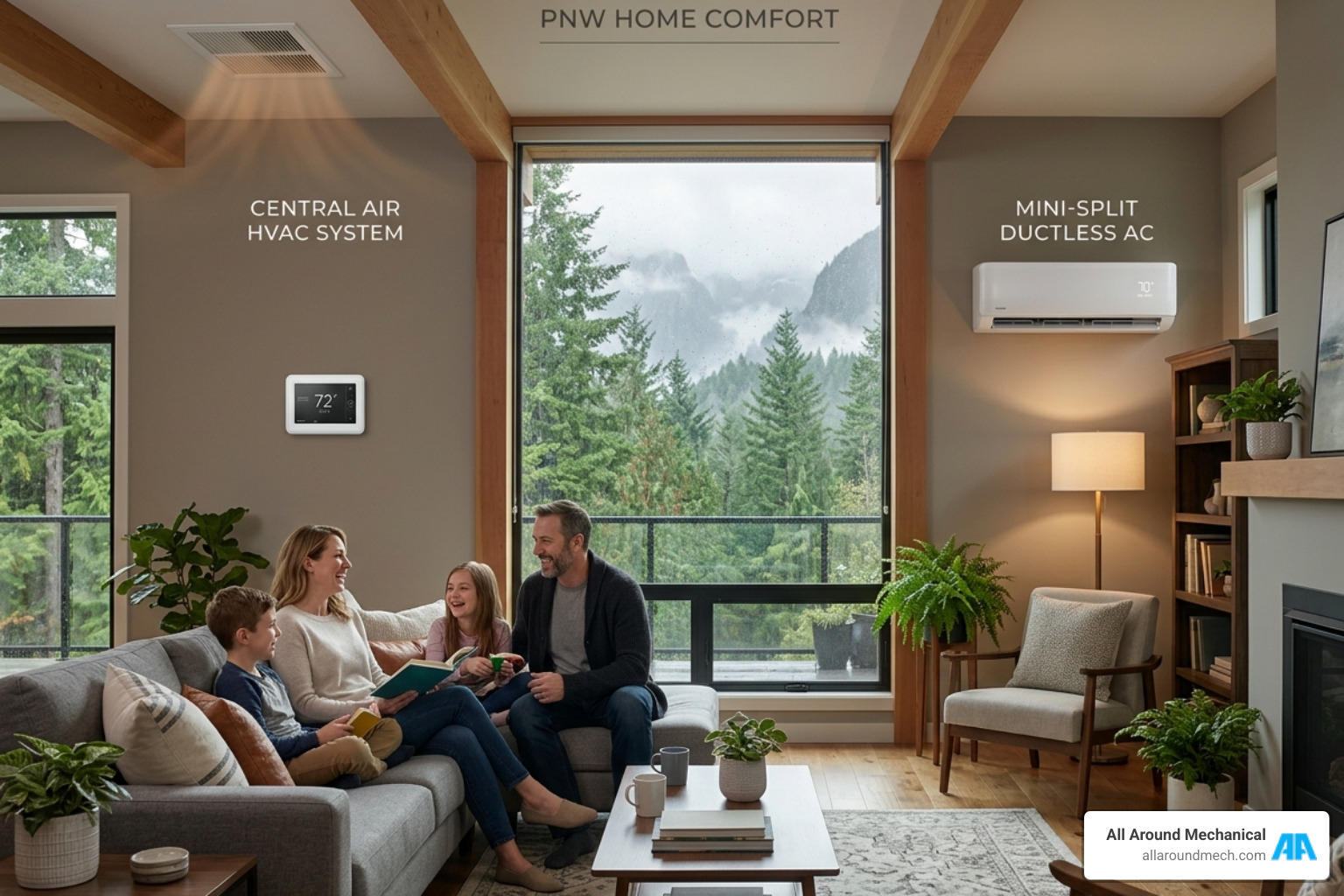
Choosing the Right Cooling System for Southwest Washington Homes
Central air vs mini split for southwest washington homes is one of the most common questions homeowners in the Vancouver, Ridgefield, and Battle Ground area face when summer heat rolls in. Southwest Washington’s climate is mild but unpredictable — humid summers, cool winters, and everything in between. That mix makes choosing the right cooling system more important than it might seem.
Here’s a quick answer to help you decide:
| Your Situation | Best Fit |
|---|---|
| Home already has ductwork | Central air conditioning |
| Older home with no ductwork | Ductless mini-split |
| Want room-by-room temperature control | Ductless mini-split |
| Large home, whole-house cooling needed | Central air conditioning |
| Prioritizing energy efficiency | Ductless mini-split |
| Tight installation timeline | Ductless mini-split |
| Lower upfront cost with existing ducts | Central air conditioning |
Both systems can keep your home comfortable. But the right choice depends on your home’s layout, age, existing infrastructure, and how you use your space. In the sections below, we break down exactly how each system works, how they perform in the Pacific Northwest climate, and which one makes the most sense for your specific situation.
Central Air vs Mini Split for Southwest Washington Homes: Which is Right for You?
When we talk about central air vs mini split for southwest washington homes, we are looking at two very different mechanical approaches to comfort. Central air conditioning is a “whole-house” solution. It relies on a large outdoor condenser unit and an indoor evaporator coil (usually sitting on top of your furnace). It uses a network of ducts to push chilled air into every room simultaneously. If your home in Brush Prairie or Vancouver already has a furnace and ductwork, adding central AC is often a straightforward process. You can explore our Central Hvac Services Brush Prairie Wa/ to see how these integrated systems work.
On the other hand, a ductless mini-split consists of an outdoor unit connected to one or more indoor air handlers via small refrigerant lines. These air handlers are mounted directly on the wall or ceiling of the rooms you want to cool. Because they don’t require bulky ducts, they are incredibly flexible. Whether you are looking for Ductless Mini Split Heating And Air Conditioning Brush Prairie Wa/ or a multi-zone setup for a larger home, these systems allow you to control the temperature of each room independently.
Energy Efficiency and Performance in the Pacific Northwest
In April 2026, energy efficiency is more than just a buzzword; it’s a necessity for managing monthly utility bills. When comparing central air vs mini split for southwest washington homes, efficiency ratings like SEER (Seasonal Energy Efficiency Ratio) tell a big part of the story.
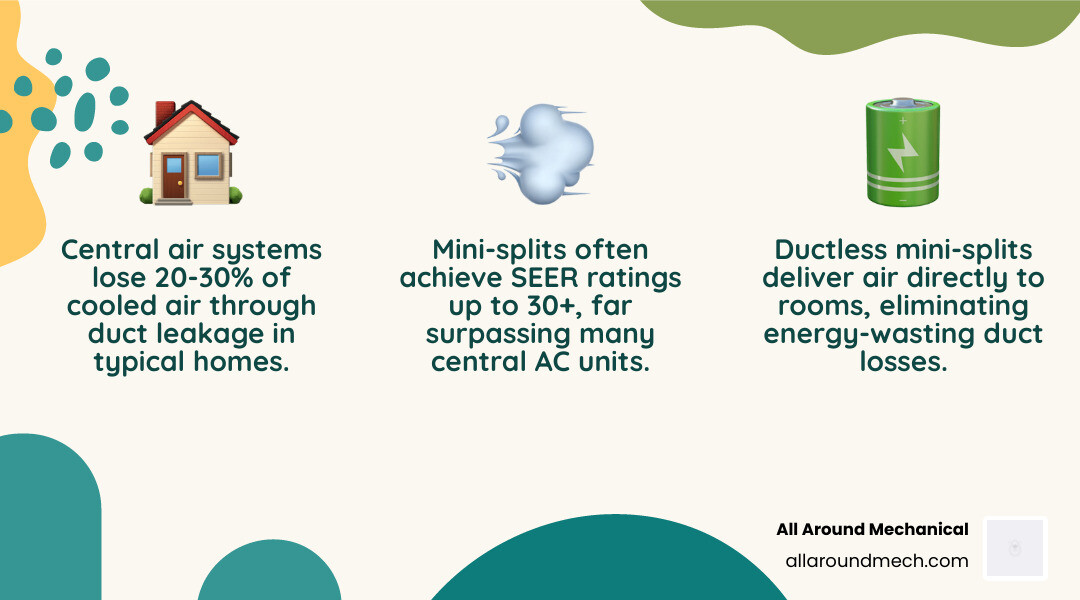
Standard central air units typically offer SEER ratings between 14 and 21. However, central systems face a major hurdle: duct loss. Research shows that 20% to 30% of cooled air can escape through leaky, uninsulated, or poorly sealed ducts before it ever reaches your living space. This means your unit has to work harder and run longer to achieve the temperature set on your thermostat.
Ductless mini-splits leapfrog this issue by delivering air directly into the room. Because there are no ducts to leak, they are inherently more efficient. Furthermore, many mini-splits use variable-speed compressors (inverter technology) that adjust their speed to match the cooling demand exactly, rather than simply turning full-on or full-off. This allows mini-splits to achieve SEER ratings as high as 30. If you want to Enhance Efficiency With Mini Split Heat Pump Systems Today/, switching to a ductless model can often lower energy costs by 25% to 40% compared to traditional electric heating and cooling. You can learn more about how Mini Split System Age And Efficiency/ play a role in your long-term savings.
| Feature | Central Air Conditioning | Ductless Mini-Split |
|---|---|---|
| Typical SEER Rating | 14 – 21 | 16 – 30+ |
| Energy Loss | 20% – 30% (via ducts) | Near 0% |
| Compressor Type | Often Single/Two-Stage | Variable-Speed (Inverter) |
| Zoning | Whole-house (Single Zone) | Room-by-room (Multi-Zone) |
Choosing the Right System for Your Home Layout
Southwest Washington is home to a beautiful variety of architecture. From the historic Craftsman bungalows in Camas to the modern new constructions in Ridgefield and Vancouver, the “best” system often depends on the bones of the house. You can find more details in our Ultimate Guide To Residential Hvac Systems For Homeowners/ or explore the Different Types Of Cooling Systems/ available to local residents.
Is a mini split for southwest washington homes the best choice for historic houses?
For many of the older homes in Ridgefield, Camas, and Vancouver, installing central air is a massive undertaking. These homes were often built before air conditioning was standard, meaning they lack the wall cavities and attic space required for large ductwork. Installing ducts in a historic home often requires cutting into original plaster, lowering ceilings, or sacrificing closet space.
This is where the mini-split shines. Installation is non-invasive, requiring only a small three-inch hole in the exterior wall to connect the indoor and outdoor components. This allows you to preserve the architectural integrity of a classic bungalow while enjoying modern comfort. Our Ductless Hvac Service Ridgefield Vancouver Wa/ is specifically designed to help homeowners in these areas upgrade without the mess of a major renovation. For residents in Camas, a Hvac/Camas Wa/Ductless Air Conditioner/ is often the most practical and cost-effective way to bring cooling to a second story or a specific room that stays too hot in the summer.
Deciding between central air vs mini split for southwest washington homes with existing ductwork
If your home was built in the last few decades and already has a functional duct system, central air is a very compelling option. The infrastructure is already there, which can make the initial setup simpler. Central AC provides a uniform “set it and forget it” comfort level. Every room in the house is cooled to the same temperature, and the only visible parts of the system are the floor or ceiling vents and a single thermostat.
For those who want the best of both worlds, we often recommend the Daikin Fit System/. The Daikin Fit/ is a side-discharge smart HVAC system that connects to your existing ductwork but uses the same high-efficiency inverter technology found in mini-splits. It’s compact, quiet, and perfect for the tight lot lines often found in newer Vancouver neighborhoods.
Comfort, Air Quality, and Long-Term Value
When evaluating central air vs mini split for southwest washington homes, comfort isn’t just about the temperature; it’s about control. Mini-splits offer “zoning,” which means you can keep your bedroom at a crisp 68 degrees while leaving the guest room or home office at 74. This eliminates the “hot upstairs, cold basement” syndrome common in multi-story Pacific Northwest homes.
Indoor air quality is another major factor. Central AC ducts can become breeding grounds for dust, allergens, and mold if not cleaned regularly. Ductless systems use advanced multi-stage filtration to trap pollutants before they enter your air. Because there are no ducts to collect debris, the air is often much cleaner. There are many The Benefits Of Ductless Air Conditioning/ that go beyond just saving money, including Benefits Of Installing Mini Split Ac/ like whisper-quiet operation.
Furthermore, the Daikin Ductless/ units we install are known for their sleek design and reliability. In terms of home resale value, both systems are seen as major upgrades in the Southwest Washington market. While central air is a classic expectation for many buyers, the high efficiency and low operating costs of a multi-zone ductless system are increasingly viewed as a premium feature that can set a home apart.
Maintenance and Local Incentives in Washington State
No matter which system you choose, regular care is the secret to longevity. For central air, this means changing your furnace filters every 1-3 months and having the ducts inspected periodically. For mini-splits, maintenance is even simpler: you just need to rinse the reusable filters every few weeks to ensure optimal airflow.
We always encourage homeowners to watch for Signs You Need Ductless Hvac Service/, such as strange noises or a drop in cooling power. Catching issues early can prevent Sudden Ductless Ac Shutdowns Fixed/ during the hottest week of July. If you notice Signs Ductless Ac Needs Immediate Attention/, it’s best to call a professional right away.
In Southwest Washington, there are also fantastic financial incentives to help you upgrade. Local utilities like Clark PUD and Puget Sound Energy often offer significant rebates for homeowners who switch to high-efficiency heat pump systems, especially ductless models. These rebates, combined with federal tax credits, can make the transition to a more efficient system much more affordable for families in Battle Ground, Washougal, and beyond.
Frequently Asked Questions about Cooling in Southwest Washington
Which system provides better indoor air quality?
Ductless mini-splits generally provide superior air quality. Because they don’t use ducts, they avoid the accumulation of dust, pet dander, and pollen that often gets trapped in traditional ventilation systems. Additionally, most mini-splits feature high-quality, washable filters that are very effective at trapping small particles. If you ever experience Poor Airflow From Mini Split Ac/, it’s usually a sign that these filters simply need a quick cleaning.
Do mini-splits provide heat during Washington winters?
Yes! Most mini-splits are actually “heat pumps,” meaning they can both heat and cool your home. They are incredibly efficient during our mild Washington winters, extracting heat from the outdoor air even when it’s chilly outside. A Mini Split Hvac Brush Prairie Wa/ can serve as your primary heat source, replacing expensive electric baseboard heaters or old wall heaters and providing year-round comfort.
How long do these systems typically last?
A well-maintained central air conditioner typically lasts 10 to 15 years. Ductless mini-splits, when cared for properly, can often last 20 years or more. The key is keeping the coils clean and addressing any Mini Split Refrigerant Problems Signs/ early on. Regular professional inspections every two years can significantly extend the life of either system.
Conclusion
Choosing between central air vs mini split for southwest washington homes doesn’t have to be a stressful decision. If you have existing ductwork and want a simple, whole-home solution, central air (or a high-efficiency hybrid like the Daikin Fit) is likely your best bet. If you live in a historic home, want to cool a specific addition, or are looking for the absolute highest energy efficiency and room-by-room control, a ductless mini-split is the clear winner.
At All Around Mechanical, we take pride in helping our neighbors in Vancouver, Ridgefield, Battle Ground, and throughout Southwest Washington find the perfect comfort solution for their unique homes. We prioritize excellence, affordability, and your total satisfaction. Whether you need a quick repair or a brand-new installation, we’re here when you need us most.
Ready to find the best cooling system for your home? More info about HVAC services is just a click away, or give us a call today for a free estimate!