

 (360) 896-2829
What Does an HVAC Maintenance Plan Include — and Why It Matters for Your Home
What does an HVAC maintenance plan include is exactly the right question to ask before signing any service agreement. Here’s a quick answer:
A standard HVAC maintenance plan typically includes:
- Thermostat inspection and calibration
- Electrical connection checks and capacitor testing
- Evaporator and condenser coil cleaning
- Refrigerant level check
- Condensate drain flush and pan cleaning
- Blower motor inspection
- Air filter assessment or replacement
- Heat exchanger and burner inspection (heating season)
- Carbon monoxide safety testing
- Overall system performance test
Most plans schedule two visits per year — one in spring before cooling season and one in fall before heating season.
Think about how you treat your car or your teeth. You don’t wait for a breakdown or a toothache to take action — you schedule routine checkups to catch small problems before they become expensive ones. Your HVAC system works the same way.
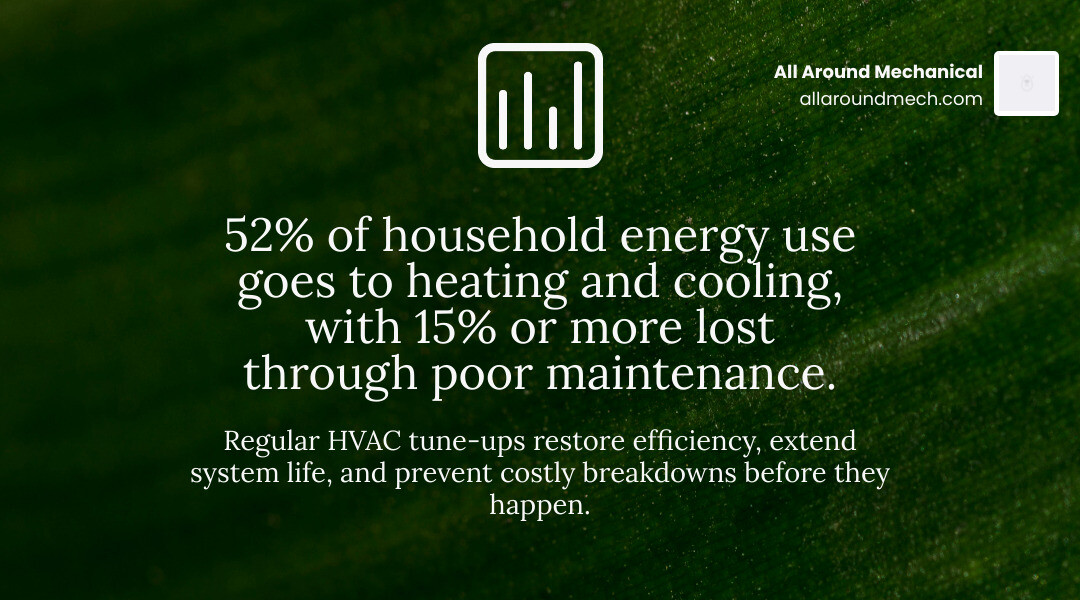
Heating and cooling account for over 52% of a typical home’s annual energy use. That’s a significant investment in your monthly budget — and a poorly maintained system can quietly drain 15% or more in wasted energy without you ever noticing. In Southwest Washington, where summers heat up and winters bring real cold, your system doesn’t get a break. Neither should your maintenance schedule.
A good HVAC maintenance plan is a proactive agreement with a licensed contractor to keep your system inspected, cleaned, and running efficiently before problems show up — not after.
Defining the Service: Maintenance Plans vs. Home Warranties

When we talk to homeowners in Ridgefield or Vancouver, we often find a bit of confusion regarding the difference between a maintenance plan and a home warranty. It’s an important distinction because they serve completely different purposes in your home management strategy.
A home warranty is reactive. It is essentially an insurance policy that helps cover the cost of repairs or replacements when a system eventually fails. You pay a premium, and if your furnace dies in the middle of January, the warranty company helps foot the bill.
An HVAC maintenance plan, however, is proactive. Instead of waiting for the disaster, you are investing in the ongoing health of your equipment. Think of it as the difference between having health insurance and going to the gym and eating well. One pays for the hospital visit; the other keeps you out of the hospital in the first place.
Many homeowners ask: Annual Maintenance Plan: Are They Valuable? The answer lies in system longevity. A well-maintained air conditioner can last 15 to 20 years, whereas a neglected one often starts failing around the 10-year mark. Furthermore, most manufacturers actually require proof of professional maintenance to honor their equipment warranties. If you can’t show you’ve been taking care of the system, they might deny your claim when a major part fails.
| Feature | HVAC Maintenance Plan | Home Warranty |
|---|---|---|
| Primary Goal | Prevention and Efficiency | Financial Protection from Failure |
| Service Type | Proactive (Scheduled Tune-ups) | Reactive (Service Calls) |
| Impact on Lifespan | Extends system life | Does not extend life |
| Impact on Bills | Lowers monthly energy costs | No impact on energy costs |
| Warranty Status | Keeps manufacturer warranty valid | Usually requires proof of maintenance |
What Does an HVAC Maintenance Plan Include for Cooling Systems?
As we approach the warmer months in Southwest Washington, your air conditioner becomes the MVP of your home. But before you crank that thermostat down in June, a professional cooling tune-up ensures the system is ready for the heavy lifting.
So, what does an hvac maintenance plan include when it comes to cooling? We focus on the components that are most likely to fail under stress or cause a spike in your utility bills.
- Condenser Coil Cleaning: The outdoor unit (the condenser) is exposed to the elements. Dust, pollen, and grass clippings get trapped in the fins, acting like a blanket that prevents heat from escaping. We clean these coils so your system doesn’t have to work twice as hard to cool your home.
- Evaporator Coil Inspection: Inside your home, the evaporator coil absorbs heat. If it’s dirty, it can’t do its job, often leading to frozen coils and a complete system shutdown.
- Refrigerant Level Check: A system with low refrigerant is usually a system with a leak. Operating with the wrong levels can destroy your compressor—the most expensive part of your AC.
- Condensate Drain Clearing: This is a big one. As your AC cools the air, it removes moisture. That water goes into a drain line. If that line clogs with algae or debris, it can back up and cause significant water damage to your home.
- Electrical Component Testing: We check capacitors and contactors. These parts have a finite lifespan, and catching a “weak” capacitor during a maintenance visit prevents an emergency “no-cool” call on a 90-degree Sunday.
- Thermostat Calibration: We ensure your “brain” is talking to your “muscles” correctly so you aren’t paying for cooling you aren’t actually getting.
Standard AC Tune-Up Checklist:
- Inspect and tighten all electrical connections
- Measure voltage and amperage on motors
- Lubricate all moving parts (if applicable)
- Check and clean the condensate drain line
- Inspect the blower motor and belt
- Clean or replace standard air filters
- Monitor system starting capabilities
- Test safety controls
Critical Heating and Heat Pump Inspection Points
When the rain sets in and the temperatures drop in Battle Ground or Camas, your heating system takes center stage. Whether you have a traditional gas furnace or a modern heat pump, the maintenance requirements are critical for both comfort and safety.
For gas furnaces, our primary focus is safety. We perform rigorous carbon monoxide testing and a visual inspection of the heat exchanger. A cracked heat exchanger is a serious safety hazard that can leak combustion gases into your living space. We also clean the burners and inspect the ignition system to ensure reliable startups when you need them most.
What does an HVAC maintenance plan include for heat pumps?
Heat pumps are incredibly popular in our region because of their efficiency, but they are also more complex because they run year-round. They don’t get a “season off” like a furnace or a standalone AC.
When we look at What Does Heat Pump Maintenance Include?, we are checking the reversing valve, which allows the system to switch between heating and cooling modes. We also test the defrost cycle to ensure the outdoor unit doesn’t turn into a block of ice during a cold snap. Since heat pumps rely on auxiliary heat strips for backup, we verify those are functioning correctly so you aren’t left in the cold if the temperature drops below the heat pump’s “balance point.”
Regular service provides Key Benefits of Regular HVAC Service, including ensuring that the refrigerant flow is optimized for the specific season.
What does an HVAC maintenance plan include for year-round efficiency?
Efficiency isn’t just a buzzword; it’s a direct reflection of your bank account. As mentioned, heating and cooling account for about 52% of your home’s energy use. A system that is even slightly neglected can see a 15% drop in efficiency.
By optimizing airflow and ensuring all sensors are calibrated, we help you keep that money in your pocket. We look for “hidden” efficiency killers like dirty blower wheels or loose duct connections. You can discover more Maintenance Secrets to Keep Your HVAC from Quitting on You by understanding how these small adjustments add up to major savings over the 15-to-20-year life of your system.
Why Southwest Washington Homeowners Invest in Service Agreements
Living in Southwest Washington—from the windy Columbia River Gorge in Washougal to the rural reaches of Yacolt—presents unique challenges for HVAC systems. Our climate is damp, which can lead to biological growth in drain lines, and our seasonal swings can be dramatic.
One of the biggest reasons our neighbors in Vancouver and Ridgefield invest in maintenance plans is priority scheduling. When a heatwave hits the Pacific Northwest, every HVAC company’s phone rings off the hook. Maintenance plan members typically jump to the front of the line. It’s the difference between waiting four hours for a technician and waiting four days.
Another major factor is Indoor Air Quality (IAQ). Did you know that indoor pollutant levels are often 2 to 5 times higher than outdoor levels? A dirty HVAC system acts as a giant lung, circulating dust, pollen, and pet dander throughout your home. Part of a comprehensive maintenance plan involves inspecting the filtration system and checking for duct leaks.
Research shows that 20% to 30% of conditioned air is lost through typical duct leaks in the average home. That’s air you’ve already paid to heat or cool, escaping into your crawlspace or attic. We identify these issues during routine visits so you can breathe cleaner air and stop wasting money on “heating the outdoors.”
Professional Tune-Ups vs. Homeowner Maintenance Tasks
We are often asked if homeowners can just do the maintenance themselves. While we love a proactive homeowner, there is a big difference between “basic care” and a “professional tune-up.”
Think of it like your car: you can probably check the tire pressure and top off the windshield wiper fluid, but you likely go to a professional for the brake inspection and engine diagnostics.
Homeowner Maintenance Tasks (The DIY List):
- Filter Changes: This is the #1 thing you can do. Check your filter every 30 days and replace it at least every 90 days (or more often if you have pets or allergies).
- Vent Clearance: Ensure that furniture, rugs, or curtains aren’t blocking your return or supply vents.
- Outdoor Unit Debris: Keep shrubs and plants trimmed at least two feet away from your outdoor unit. Clear away any leaves or “helicopter” seeds that accumulate against the fins.
- Visual Checks: Keep an eye out for frayed wires or ice forming on the copper lines.
Professional Maintenance Tasks (The Experts Only List):
- Refrigerant Handling: Only EPA-certified technicians can legally and safely handle refrigerant.
- Electrical Testing: We use multimeters to test the exact “microfarads” of your capacitors. If a capacitor is rated for 45 and it’s reading at 38, it’s about to fail.
- Heat Exchanger Inspection: Identifying tiny hairline cracks in a furnace requires specialized mirrors, cameras, and training.
- Combustion Analysis: Measuring the efficiency of the “burn” in your furnace to ensure it’s not producing excess carbon monoxide.
- Blower Assembly Cleaning: Removing a blower motor to clean the wheel is a complex task that, if done incorrectly, can unbalance the motor and lead to an expensive failure.
Frequently Asked Questions about HVAC Maintenance
How often should I schedule professional HVAC maintenance?
The industry standard—and our recommendation for homes in Southwest Washington—is twice per year. You should schedule a cooling tune-up in the spring (March-May) and a heating tune-up in the fall (September-November). If you have a heat pump, these two visits are equally important because the system is working hard in both the heat and the cold.
Does a maintenance plan keep my manufacturer warranty valid?
Yes! In fact, skipping professional maintenance is the fastest way to void your manufacturer’s warranty. Most major brands (like Carrier, Trane, or Lennox) explicitly state in their fine print that damage caused by a lack of maintenance is not covered. Keeping your service records from a maintenance plan is your “insurance” that the manufacturer will honor their parts warranty if something goes wrong.
Can a maintenance plan help lower my monthly utility bills?
Absolutely. A system with clean coils, a fresh filter, and a perfectly calibrated charge of refrigerant uses significantly less electricity to move the same amount of air. When your system doesn’t have to “struggle” to reach your desired temperature, it runs shorter cycles and consumes less power. Most homeowners find that the energy savings alone help offset the cost of the plan.
Conclusion
Investing in an HVAC maintenance plan is about more than just preventing breakdowns; it’s about peace of mind, home safety, and financial smarts. Whether you are in a brand-new build in Ridgefield or a classic home in Vancouver, your heating and cooling system is likely the most expensive appliance you own. It makes sense to protect it.
At All Around Mechanical, we take pride in serving our neighbors across Southwest Washington. From Brush Prairie to Longview, we are committed to providing the kind of thorough, expert care that keeps your home comfortable all year long.
If you’re looking for a Maintenance Plan Brush Prairie WA or anywhere in the surrounding areas, we are here to help. Don’t wait for the first heatwave or the first freeze to find out your system isn’t up to the task.
Ready to protect your home’s comfort? Join our maintenance program today and let us handle the heavy lifting so you can enjoy the seasons.