

 (360) 896-2829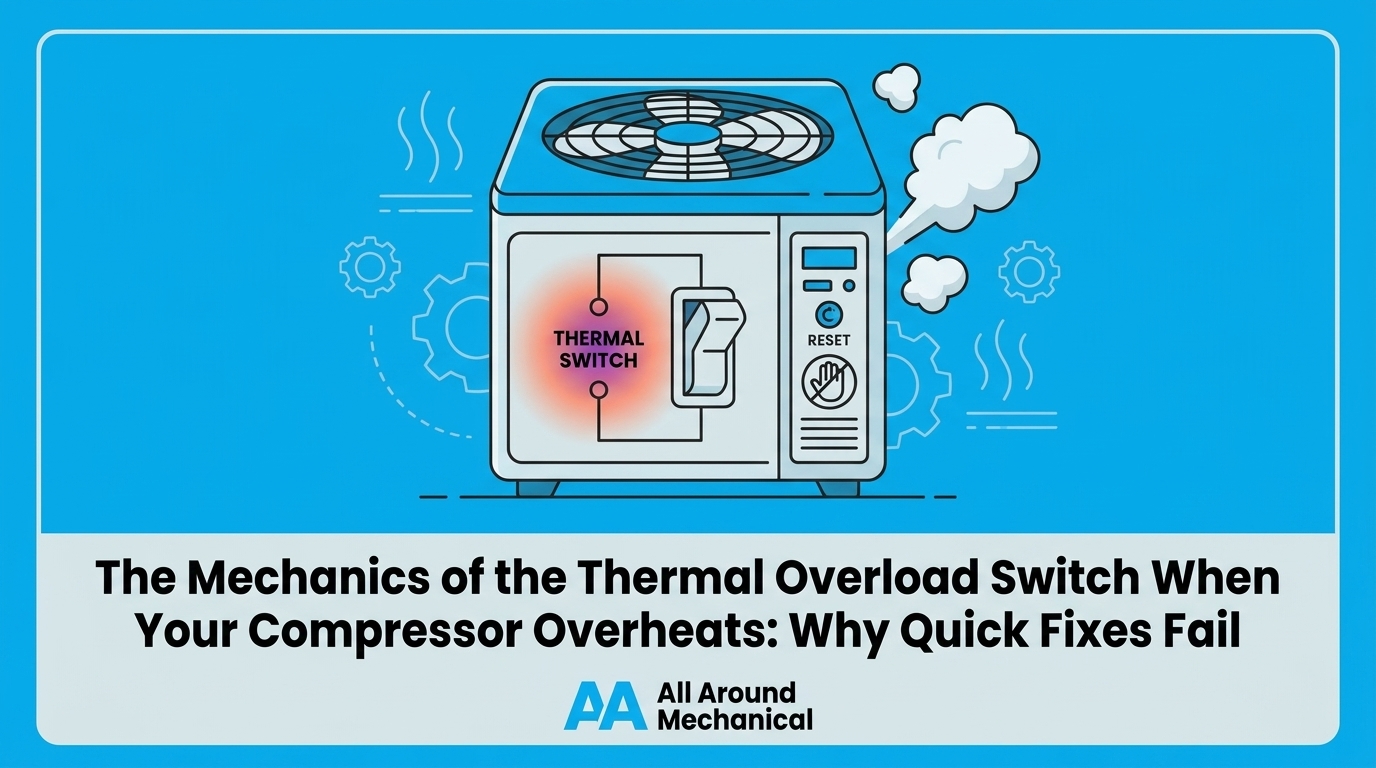
When the AC Quits: The Temptation of the Garden Hose Trick
Your air conditioning is running nonstop, but the house still feels warm, which often leads frustrated homeowners to search for the mechanics of the thermal overload switch when your compressor overheats. It is 4 p.m. during peak August late-summer heat, and your outdoor condenser unit has suddenly gone completely silent. The fan might still be spinning, but the deep, familiar hum of the compressor is noticeably absent. When you walk outside and place a hand near the metal casing, you can feel intense heat radiating from the equipment. In that moment of panic, a common but dangerous instinct kicks in: grab the garden hose and spray the unit down to force it to cool off. Here at All Around Mechanical, we field frantic calls about this exact scenario every late summer as Ridgefield families transition into the back-to-school season.
To safely resolve a completely unresponsive outdoor unit, scheduling professional AC service is the smartest first step.
While blasting the outdoor unit with cold water might seem like a logical quick fix, our team can confidently say it is actually one of the worst things you can do to your HVAC system. Spraying the compressor might temporarily lower the internal temperature enough to reset the system, but it completely ignores the underlying mechanical failure that caused the shutdown in the first place. More importantly, it introduces massive risks of permanent equipment damage and severe electrocution. Understanding exactly why your system shut itself down is the only way to save your equipment from catastrophic, irreversible failure.
Understanding the Mechanics of the Thermal Overload Switch When Your Compressor Overheats
To understand why your system shut down, you have to look inside the equipment. The thermal overload switch is an internal safety mechanism designed to protect your compressor from destroying itself. Because central air conditioners operate on high-voltage 240V electrical circuits, continuous operation under heavy strain generates extreme internal temperatures. If left unchecked, this intense heat will literally melt the thin lacquer insulation coating the motor windings inside the compressor shell, resulting in a direct electrical short and total equipment death.
The switch acts as the system’s ultimate savior. It is not a nuisance part that needs bypassing; it is the final line of defense. In areas like Ridgefield WA, late-summer heat waves force systems to run continuously for hours on end, making this protective switch absolutely essential. Over our years of servicing local neighborhoods, we have seen this simple switch prevent countless catastrophic burnouts during long, brutal cooling cycles.
If you are noticing repeated system shutdowns, you are likely witnessing signs of AC compressor failure in its early stages. Ignoring this built-in safety warning guarantees a much larger mechanical breakdown.
How the Switch Breaks the 240V Circuit
The mechanics of the switch rely on simple but highly effective physics. Inside the device sits a bimetallic disc—a small component made of two different metals bonded together. Because different metals expand at different rates when exposed to heat, the disc physically bends or snaps open when the internal temperature crosses a critical danger threshold.
- Normal Operation: The bimetallic disc remains flat, keeping the electrical contacts closed and allowing 240 volts of electricity to power the compressor motor.
- Overload State: The internal heat causes the disc to warp and snap open, instantly breaking the electrical connection and stopping the motor.
- The Reset Period: The switch will not close again until the internal temperature drops back to a safe baseline. Because the compressor is a dense block of steel and copper, this natural cooling process can take several hours.
| System State | Internal Temperature | Switch Position | Compressor Status |
|---|---|---|---|
| Normal Cooling | Safe operating range | Closed | Running efficiently |
| Heavy Strain | Rising near limits | Closed | Running hot, high amperage |
| Thermal Overload | Critical danger zone | Open (Snapped) | Completely shut down |
The safety rule: Because this switch is an internal, high-voltage component sealed inside the compressor housing, we strongly advise homeowners never to attempt DIY multimeter testing or bypassing procedures. Doing so risks immediate electrocution and guaranteed equipment destruction.
Why Cooling an Overheated Compressor with Water is a Dangerous Mistake
The temptation to use the “garden hose trick” usually peaks during August late-summer heat, right when the house is at its most uncomfortable. However, hitting a scorching hot compressor with cold water triggers a destructive physical reaction known as thermal shock.
The problem: Metals expand when they get hot and contract when they cool down. When a compressor reaches thermal overload, the heavy steel shell and internal copper components are expanded to their maximum tolerances.
The cause of damage: Rapidly cooling that hot metal with cold water causes sudden, violent contraction. This uneven shrinking can easily crack the hermetically sealed shell of the compressor, warp internal valves, or shatter delicate mechanical components. Once the shell is compromised or the internal mechanics are cracked, the entire compressor is ruined.
The solution: Rely on professional diagnostic expertise rather than dangerous DIY interventions. When an All Around Mechanical licensed technician evaluates your system, we use a systematic, safe approach to find the actual problem without risking your safety or your equipment. If your outdoor unit is making terrible noises before shutting down, you might be diagnosing a screaming heat pump compressor, which requires specialized gauges and electrical meters to evaluate.
Furthermore, spraying water onto a unit connected to a live 240V circuit presents a severe electrocution hazard. If there is any frayed wiring, degraded insulation, or a failing capacitor inside the cabinet, water can create a direct path for high-voltage current. Forcing a system to run by artificially cooling the switch bypasses the safety mechanism entirely, guaranteeing that whatever root cause tripped the switch in the first place will continue to strain the motor until it burns out completely.
What Actually Causes Your AC Compressor to Overheat?
A tripped thermal switch is always a symptom, never the disease. If the switch has snapped open, it means the compressor is working far beyond its designed capacity. Identifying the root cause requires checking multiple interconnected systems, as several common AC problems that need immediate service manifest as overheating. Our diagnostic calls routinely trace the issue back to one of these four culprits:
- Failing Dual Run Capacitors: The capacitor provides the massive jolt of stored electricity needed to start the compressor and keep it spinning efficiently. When a capacitor weakens, the compressor struggles to start, pulling excessive electrical current (locked rotor amps) and generating massive amounts of heat.
- Neglected Condenser Coils: By late August, cumulative end-of-season wear reaches its peak. Dust, pollen, and debris act like a heavy winter blanket wrapped around your outdoor coils. If the system cannot exhaust heat into the outside air, that heat stays trapped inside the compressor shell.
- Low Refrigerant Levels: Most homeowners do not realize that the cold refrigerant returning from the indoor evaporator coil actually cools the compressor motor as it flows through the shell. If your system has a leak and is low on refrigerant, the motor loses its primary cooling source and will quickly overheat.
- Failing Condenser Fan Motor: If the fan sitting on top of the outdoor unit slows down or seizes up, no air is pulled across the coils to remove heat, leading to an immediate thermal overload event.
The Role of High Amperage Draw
Heat inside an air conditioner does not just come from the sun beating down on the metal cabinet; the most destructive heat is generated by electrical strain. When mechanical parts wear out or airflow is restricted, the compressor has to pull more electrical current (amperage) to do the same amount of work. High amperage draw generates massive internal heat, which eventually trips the thermal overload switch.
Only a professional with specialized electrical meters can safely measure amperage on a live 240V system. Attempting to diagnose high amperage draw without the proper training and personal protective equipment is incredibly dangerous.

Evaluating the Damage: Next Steps for a Tripping Compressor
If your system’s switch has tripped multiple times, the compressor has already endured significant thermal stress. Every overheating event degrades the internal components just a little bit more. The extreme heat breaks down the lubricating oil inside the system, turning it highly acidic. This acid then slowly eats away at the thin insulation protecting the copper motor windings.
The diagnostic process: When our professional technicians arrive at your home, we do not just try to turn the system back on. We use a specialized tool called a megohmmeter to test the integrity of the motor windings. This test reveals whether the insulation is still intact or if the windings are compromised and shorting out to the ground.
If the windings are severely degraded, the compressor is no longer salvageable. At this stage, homeowners face a critical decision. Repeated overheating events drastically shorten the lifespan of the equipment, and you will find yourself choosing between AC repair or replacement. If the unit is relatively new, replacing just the compressor might make sense. However, if the system has been battling the intense Ridgefield WA summer heat for over a decade, our team often recommends investing in a completely new, high-efficiency system as the more reliable choice. (Federal tax credits may even apply to qualifying heat pump installations, which we always encourage our customers to verify with a tax professional.)
Frequently Asked Questions About Compressor Thermal Overload
Why does my AC compressor keep shutting off on thermal overload?
It shuts off because internal temperatures have reached a critical danger zone, threatening to melt the motor windings. This is a deliberate safety mechanism, not a malfunction of the switch itself. The root cause is usually a failing run capacitor, severely restricted airflow from dirty coils, or low refrigerant levels causing the motor to overwork. A technician must identify and fix the underlying strain before the system can run safely.
Is it safe to spray water on an overheated AC compressor?
No, spraying water on a hot compressor is extremely dangerous for both you and your equipment. Rapidly cooling the hot metal causes thermal shock, which can instantly crack the hermetically sealed shell or shatter internal valves. Additionally, introducing water to a live 240V electrical appliance creates a severe risk of deadly electrocution.
How long does it take for an AC compressor to cool down?
A tripped compressor can take anywhere from two to twenty-four hours to cool naturally, depending on the ambient outdoor temperature and how heavily it was straining before it shut down. Because the compressor is a dense, heavy block of metal sealed inside a steel shell, it retains heat for a very long time. The internal bimetallic switch will not reset until the core temperature drops back to a safe operating baseline.
Can you bypass a thermal overload switch on an AC unit?
You should never bypass this switch under any circumstances. The switch is the absolute final line of defense protecting your system from catastrophic electrical failure and potential fire hazards. Bypassing it forces an overheating motor to keep running until the internal wiring melts, guaranteeing the permanent destruction of the compressor.
What are the signs of a failing thermal overload switch?
While rare, a failing switch might trip prematurely even when the compressor is running at normal, safe temperatures. You might notice the outdoor unit short-cycling—turning on for just a few minutes before abruptly shutting down. Because the switch is sealed inside the compressor housing, confirming a failure requires specialized electrical testing by a licensed HVAC professional.
Protect Your System with Professional Diagnostics
The short answer is that if your system has shut itself down, it did so to save its own life. The thermal overload switch is doing exactly what it was engineered to do: protecting your expensive equipment from a total meltdown. Forcing the unit to run by hosing it down with water or attempting to bypass the electrical safeties will only transform a repairable problem into a catastrophic, permanent failure.
Rather than risking your safety and your equipment, the smartest move is to seek professional diagnostics. The All Around Mechanical team has the tools and training to safely identify exactly why the compressor is pulling high amps and generating excess heat. If you want to understand the mechanics of the thermal overload switch when your compressor overheats, the best approach is to let our local experts evaluate your system safely, ensuring your home stays cool as we wrap up another Ridgefield summer.