

 (360) 896-2829
Is Annual HVAC Maintenance Worth It? Here’s the Short Answer
Annual HVAC maintenance is it worth it for most homeowners — but how much value you get depends on your system type, age, and how well you understand what you’re actually paying for.
Quick answer:
- Yes, it’s worth it if you have an older system, a heat pump, or a manufacturer warranty that requires documented service.
- It’s still a smart move for most homeowners because it catches small problems before they become expensive repairs.
- It’s less clear-cut if your system is newer, lightly used, and still under warranty with no prior issues.
- Maintenance contracts are a separate question — the tune-up itself has real value, but the contract wrapped around it may not.
If you own a home in Southwest Washington — where systems run hard through wet winters and warm summers — skipping routine service is a gamble that often costs more in the long run. A professional tune-up helps your system run efficiently, last longer, and stay safe. But not every plan or schedule is right for every home.
This guide breaks down exactly what you get from annual HVAC maintenance, when to do it more than once a year, what homeowners can skip, and how to tell if a service contract is actually worth the price.
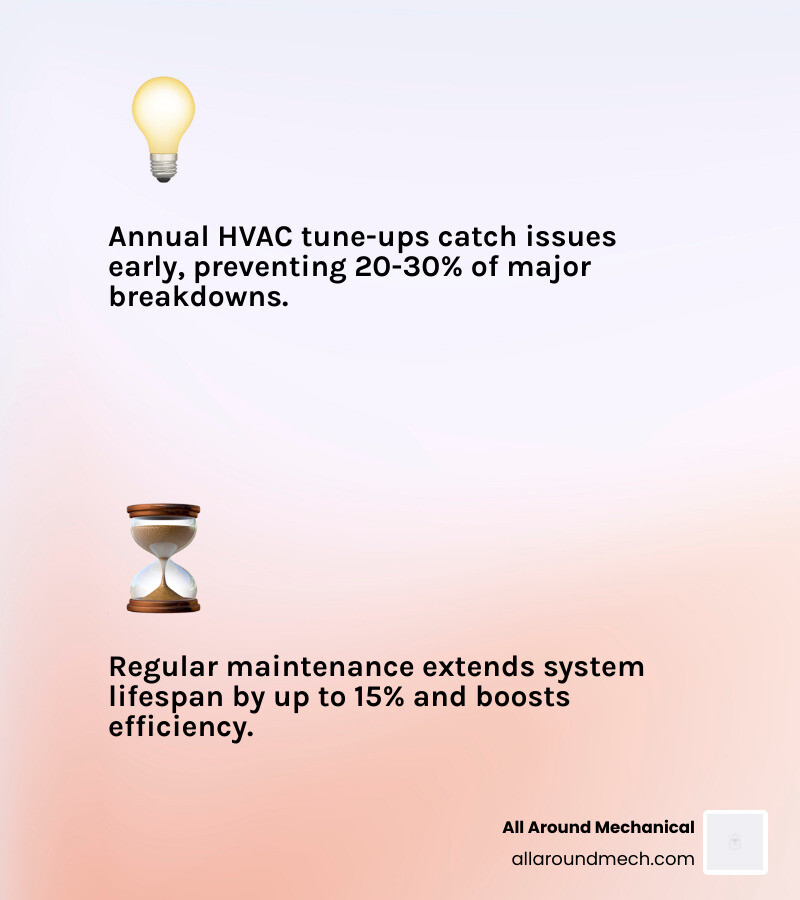
Annual HVAC Maintenance: Is It Worth It for Most Homeowners?
For most homeowners in Ridgefield, Vancouver, Brush Prairie, Battle Ground, Camas, Washougal, and across Southwest Washington, the answer is usually yes. The reason is simple: regular tune-ups help reduce avoidable problems.
A maintenance visit is not magic. It will not turn an aging system into a brand-new one, and it will not guarantee zero repairs forever. What it can do is improve operating condition, catch wear early, confirm safe function, and help your equipment avoid working harder than it should.
That matters in our area. HVAC systems here may not deal with desert heat or arctic cold every day, but they still run through long heating seasons, shoulder-season moisture, and summer cooling demand. That steady use adds up.
A tune-up tends to be most valuable when it helps with:
- Finding small issues before they become major failures
- Keeping airflow and moving parts in better condition
- Reducing strain caused by dirt, loose electrical connections, or drainage issues
- Supporting warranty documentation when required
- Improving confidence that the system is operating safely
When annual HVAC maintenance is it worth it
A single yearly visit often makes sense if you have:
- A newer system with no repair history
- Separate furnace and AC equipment with moderate use
- A standard-size home with normal occupancy
- Manufacturer instructions calling for documented routine service
- Good homeowner upkeep between visits, especially regular filter changes
In these cases, annual service is a practical middle ground. You are not overdoing it, but you are also not ignoring equipment that represents a major investment in your home.
When annual HVAC maintenance is it worth it to do more than once a year
Some homes benefit from service twice a year instead of once. Biannual maintenance is often the better fit if you have:
- A heat pump that handles both heating and cooling
- Older equipment with a history of wear-related issues
- A larger home with longer run times
- Indoor air quality concerns, allergy concerns, or persistent airflow issues
- Heavy year-round use due to family size, home office occupancy, or comfort preferences
In plain English: if your system rarely gets a break, it probably deserves more attention. Heat pumps are the classic example because they work in both seasons, so they rack up wear faster than a furnace that rests all summer.
What a Professional HVAC Maintenance Visit Usually Includes
A proper maintenance visit should be more than a quick glance and a bill. A technician should inspect, test, clean, and verify key parts of the system.
Typical tune-up tasks may include:
- Checking thermostat operation
- Inspecting electrical components and connections
- Testing system startup and shutdown
- Measuring airflow and temperature performance
- Inspecting the blower and motor
- Checking and clearing the condensate drain where applicable
- Looking for refrigerant issues on cooling equipment
- Inspecting coils and accessible components for dirt buildup
- Verifying safety controls
- Checking for unusual noises, vibration, or wear
- Inspecting filters and discussing replacement intervals
The exact checklist depends on the system type. A gas furnace needs combustion and safety checks that an AC does not. A heat pump has its own sequence of tests. That is why “maintenance” is not one-size-fits-all.
Cooling season tune-up checklist
For air conditioning and cooling performance, common professional tasks include:
- Inspecting the outdoor condenser unit
- Clearing debris and checking for blocked airflow
- Examining the evaporator and condenser coils
- Checking refrigerant levels and system pressures if needed
- Inspecting the capacitor and contactor
- Testing electrical connections and controls
- Flushing or checking the condensate drain
- Measuring temperature split and cooling performance
- Confirming the thermostat is calling correctly

A dirty outdoor unit may not look dramatic, but it can make the system work harder than necessary. That extra strain is exactly the kind of problem maintenance is supposed to reduce.
Heating season tune-up checklist
For furnaces and other heating equipment, professional maintenance often includes:
- Inspecting burners and ignition components
- Checking the heat exchanger condition as visible and accessible
- Testing safety controls
- Confirming proper airflow
- Inspecting venting and combustion-related components
- Checking for gas-related safety concerns where applicable
- Evaluating system cycling and temperature rise
- Inspecting blower performance
- Confirming thermostat communication
Heating maintenance matters for comfort, but also for safety. Research consistently points out that gas heating systems need professional checks because combustion equipment is not a DIY guessing game.
What homeowners can do themselves between visits
Homeowners can absolutely handle some important maintenance tasks. In fact, doing the basics well makes professional service more effective.
The most useful DIY tasks are:
- Replace or clean filters every 1 to 3 months, depending on filter type and household conditions
- Keep supply and return vents open and unobstructed
- Clear debris around the outdoor unit
- Maintain about a 2-foot clearance around the outdoor equipment
- Check the thermostat settings and battery if applicable
- Watch for water around the indoor unit or drain line
- Listen for new noises and pay attention to new smells
- Keep the area around indoor equipment clean and accessible
What homeowners should not do is open sealed components, handle refrigerant, or experiment with gas-related parts. If your maintenance plan includes “YouTube and confidence,” that plan has limits.
Annual vs Biannual HVAC Maintenance: Which Schedule Makes Sense?
This is where the real comparison happens. Not every system needs the same schedule.
A common approach is:
- Spring service for cooling equipment
- Fall service for heating equipment
That schedule makes good sense for homes with separate air conditioning and furnace systems. It allows each side to be checked before peak use.
Heat pumps are different because they do both jobs. Since they run in both summer and winter, many experts recommend service twice a year to keep performance and wear in check.
Annual HVAC Maintenance: Is It Worth It if you have separate heating and cooling equipment?
Sometimes yes. If your furnace and AC are separate, lightly used, and relatively new, one annual visit may be enough, especially if the service is timed well and the system has had no warning signs.
Annual service is often reasonable when:
- Equipment is newer
- You keep up with filters and basic homeowner tasks
- The system has a clean repair history
- Run time is modest
- Warranty terms do not call for more frequent service
That said, homeowners should always review warranty language carefully. Research suggests that many manufacturers want proof of routine professional maintenance, and documentation matters.
Why many experts recommend biannual service for heat pumps and high-use systems
Biannual maintenance is easier to justify when the equipment sees heavy duty. Heat pumps, in particular, run in both heating and cooling mode, which means more year-round wear on major components.
Biannual service can make sense when you need:
- Better seasonal efficiency
- More frequent checks for wear
- Performance adjustments before heating and cooling peaks
- Ongoing attention to airflow, controls, and drainage
- Regular safety review for high-use equipment
Here is a simple comparison:
| Schedule | Best for | Main advantage | Main drawback |
|---|---|---|---|
| Annual maintenance | Newer or lightly used systems | Lower maintenance burden | May miss seasonal issues sooner |
| Biannual maintenance | Heat pumps, older systems, heavy-use homes | Better seasonal readiness and earlier problem detection | More service visits to manage |
The Real Benefits of Regular Tune-Ups — and Where Claims Get Overstated
This is where homeowners deserve honesty. Maintenance has real value, but some marketing claims can sound bigger than reality.
Benefits that are usually real
These benefits are generally legitimate:
- Better operating efficiency from cleaner components and proper adjustments
- Improved airflow if filters, blower components, or coils were restricting performance
- Early problem detection before a small issue becomes a breakdown
- Cleaner operation that supports system health
- Safety checks for heating equipment
- Warranty support through documented service
These are not flashy benefits, but they are the practical ones that matter. A tune-up may not feel exciting, but neither does avoiding an emergency call during a January cold snap. That is kind of the point.
Benefits that depend on system condition
Some benefits are real, but they vary a lot based on the starting condition of the system.
These include:
- Lower utility bills
- Longer equipment life
- Better humidity control
- Improved indoor air quality
- Fewer repairs over time
If the system was already clean, properly installed, and operating well, the improvement may be modest. If it was neglected, airflow-restricted, or dirty, the improvement may be much more noticeable.
For example, replacing a clogged filter can absolutely help airflow and system strain. But if the real problem is leaky ductwork, oversized equipment, or poor installation, maintenance alone will not solve it.
What maintenance cannot do
A tune-up is valuable, but it has limits. It cannot:
- Fix bad installation work
- Seal leaky duct systems by itself
- Reverse age-related wear
- Guarantee no future repairs
- Eliminate all dust in the home
- Solve every air quality issue without the right filtration or ventilation strategy
That is why we always encourage homeowners to think of maintenance as part of a bigger home comfort plan, not the entire plan.
Are HVAC Maintenance Plans Actually Worth It?
Now for the part that creates the most confusion: the maintenance plan or service contract.
The tune-up itself often has real value. The contract attached to it may or may not.
Some consumer-focused research takes a very skeptical view of HVAC maintenance contracts, and for good reason. Homeowners often report frustration with fine print, repair exclusions, waiting longer than expected for service, or feeling pressured into extra repairs during “routine” visits.
That does not mean every plan is bad. It means the details matter.
What maintenance plans typically cover
Most plans fall into one of these buckets:
- Maintenance-only plans with scheduled tune-ups
- Plans that include maintenance plus some labor coverage
- Plans that include maintenance plus limited parts coverage
- Plans with reminders, scheduling perks, or seasonal inspections
Some plans are really just a convenient way to stay on schedule. Others are marketed more like repair protection. Those are not the same thing, and homeowners should read them differently.
Common exclusions and limitations homeowners miss
This is the part many people skip until they need help. Common exclusions or limits may involve:
- Major components
- Certain electrical parts
- Coil cleaning
- Heat exchanger issues
- Emergency timing guarantees
- Caps on covered labor or parts
- Limits tied to age, condition, or maintenance history
Research on consumer contract complaints highlights that expensive repairs are often excluded or only partially covered. Another common pain point is “priority service” that sounds stronger in marketing than it feels during peak-season delays.
So if a plan promises peace of mind, ask what that peace actually covers.
What homeowners and consumer forums often say
When homeowners discuss HVAC plans in forums and consumer threads, a few themes come up again and again:
- Some people like plans for convenience and reminder scheduling
- Some feel the plans help them stay compliant with warranty requirements
- Others regret signing up because exclusions were broader than expected
- Many dislike repeated repair recommendations during maintenance visits
- Wait times can still be frustrating during busy weather swings
The takeaway is not that plans are always useless. It is that provider quality and contract clarity matter more than the sales pitch.
When a maintenance plan can make sense
A plan may be worth considering if you have:
- An older system that benefits from regular check-ins
- A warranty requiring documented maintenance
- Multiple HVAC systems in the home
- A busy household that values automatic scheduling
- A heat pump that runs year-round
- A strong preference for service continuity with one trusted local team
If you are comparing your options for ongoing HVAC care in Southwest Washington, you can learn more about local service support here: More info about HVAC services
How to Decide What Your Home Actually Needs
There is no universal answer because homes are not universal. A newer split system in a small home has different needs than an older heat pump in a busy household with pets and allergies.
The best decision usually comes down to:
- Equipment type
- Equipment age
- How often it runs
- Repair history
- Warranty requirements
- Indoor air quality concerns
- How consistently you handle DIY upkeep
A simple decision framework for homeowners
Ask yourself these questions:
What type of system do we have?
- Heat pumps often justify biannual service.
- Separate furnace and AC systems may do fine with annual service.
How old is the equipment?
- Older systems usually benefit from more attention.
Has the system needed repairs before?
- Repeated issues make maintenance more worthwhile.
Is the unit under warranty?
- If yes, documented service may matter.
Do we stay on top of filters and basic upkeep?
- If not, professional maintenance becomes more important.
Are there comfort or air quality concerns?
- Uneven temperatures, allergy issues, and persistent dust may point to a need for inspection.
Do we want a plan for convenience, or only the tune-up itself?
- Those are different decisions and should be treated that way.
Red flags that mean professional service should not wait
Do not wait for your normal schedule if you notice:
- Weak airflow
- Short cycling
- Burning or musty odors
- Unusual noises
- Rising utility bills without an obvious reason
- Uneven temperatures from room to room
- Water leaks near the indoor unit
- Poor heating or cooling performance
Those symptoms suggest your system may need repair or diagnosis, not just routine maintenance.
Frequently Asked Questions About Annual HVAC Maintenance
Does skipping HVAC maintenance void the warranty?
It can, depending on the manufacturer and warranty terms. Research indicates that many manufacturers require documented routine professional maintenance to preserve warranty coverage. The safest move is to keep service records and review your warranty language carefully.
Is changing the filter enough maintenance for a homeowner to do?
No. Filter changes are one of the most important DIY tasks, but they are not a full maintenance program. Homeowners can also keep vents clear, maintain outdoor unit clearance, and watch for warning signs. But professional service is still important for electrical inspection, performance testing, refrigerant-related checks, and heating safety review.
Are maintenance contracts better than paying for visits as needed?
Sometimes, but not automatically. If the plan mainly offers scheduling convenience, reminders, and regular tune-ups, it may be useful for some households. If it is sold as broad repair protection, read the exclusions very carefully. In many cases, the maintenance visit itself is more valuable than the contract wrapper around it.
Conclusion
So, annual HVAC maintenance is it worth it? For most homeowners in Southwest Washington, yes. The real ROI comes from reducing preventable wear, catching problems earlier, supporting safe operation, and helping equipment perform more consistently over time.
The smarter question is not just “Should we maintain our HVAC system?” It is “What schedule and level of service actually fit our equipment and home?”
For many homes, annual service is a solid baseline. For heat pumps, older systems, and high-use households, biannual service often makes more sense. And when it comes to maintenance plans, the fine print matters just as much as the promise.
If you want help choosing the right maintenance approach for your home, we are here to make it simple. Learn more about our local HVAC support here: More info about HVAC services