

 (360) 896-2829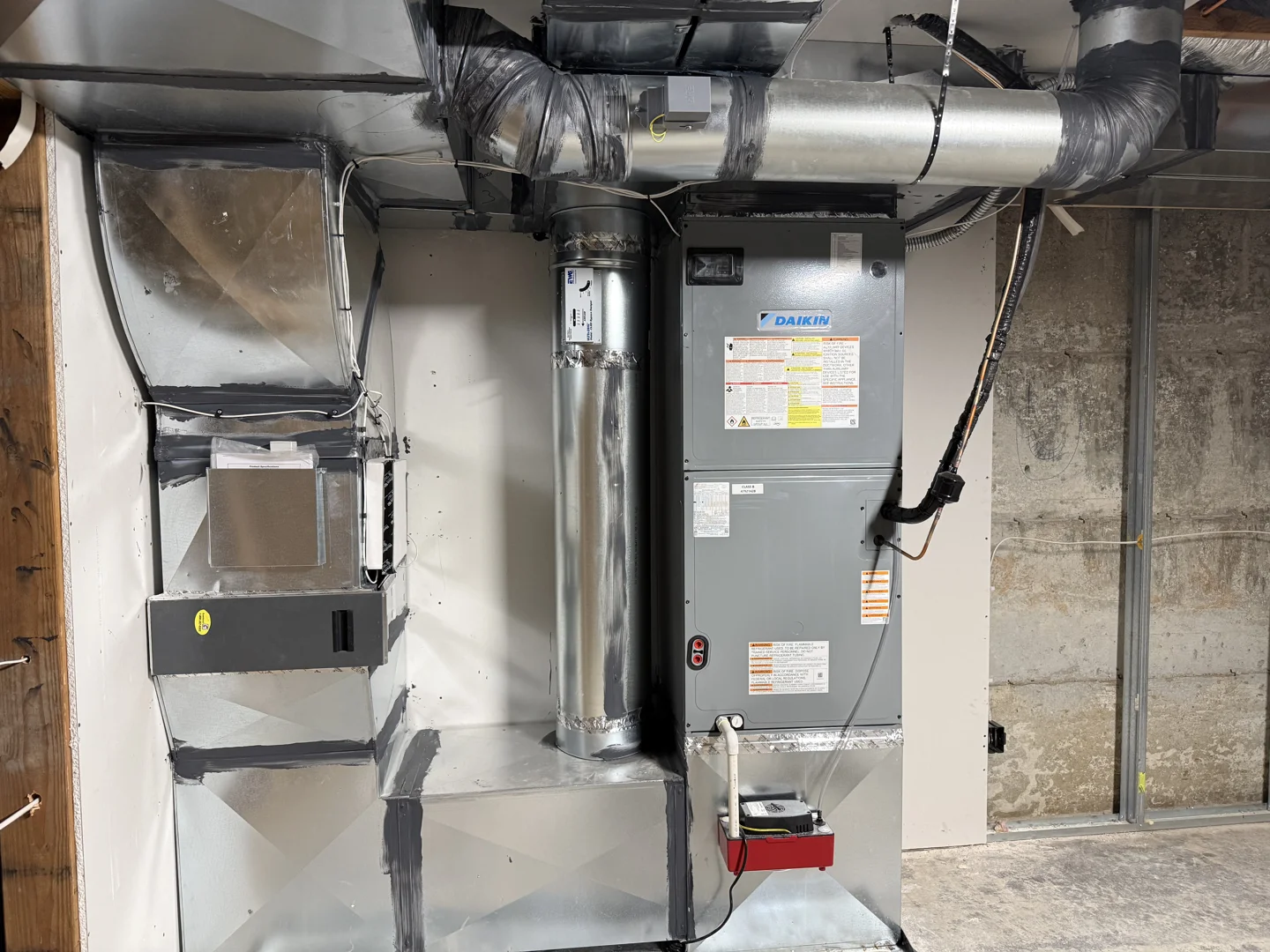
Why Understanding How Proper HVAC Maintenance Prevents Mold Growth Could Save Your Vancouver, WA Home
How proper HVAC maintenance prevents mold growth is something every homeowner in Vancouver, WA should understand — because a neglected system doesn’t just lose efficiency, it can quietly turn into a mold factory that circulates spores through every room in your home.
Here’s the short answer:
Proper HVAC maintenance prevents mold growth by:
- Controlling moisture — keeping indoor humidity between 30–50%, well below the 60% threshold where mold thrives
- Clearing condensate drain lines — removing standing water before it becomes a breeding ground
- Replacing air filters every 1–3 months — preventing dust buildup that feeds mold spores
- Sealing leaky ductwork — blocking humid air from entering and condensing inside your system
- Scheduling professional inspections twice a year — catching hidden mold hotspots like evaporator coils and drain pans early
Mold is a sneaky problem. It doesn’t start on your walls — it often starts deep inside your HVAC system, in places you can’t easily see. A 2004 study found that roughly 20% of buildings across the US, Canada, and Europe showed signs of dampness, and a significant portion of that moisture traces back to HVAC-related issues that routine maintenance could have prevented. By the time you smell something musty from your vents, mold may already be well established.
The good news? Most of this is entirely preventable with the right maintenance habits and a little expert support from a trusted local HVAC team.
The Critical Link Between HVAC Systems and Mold
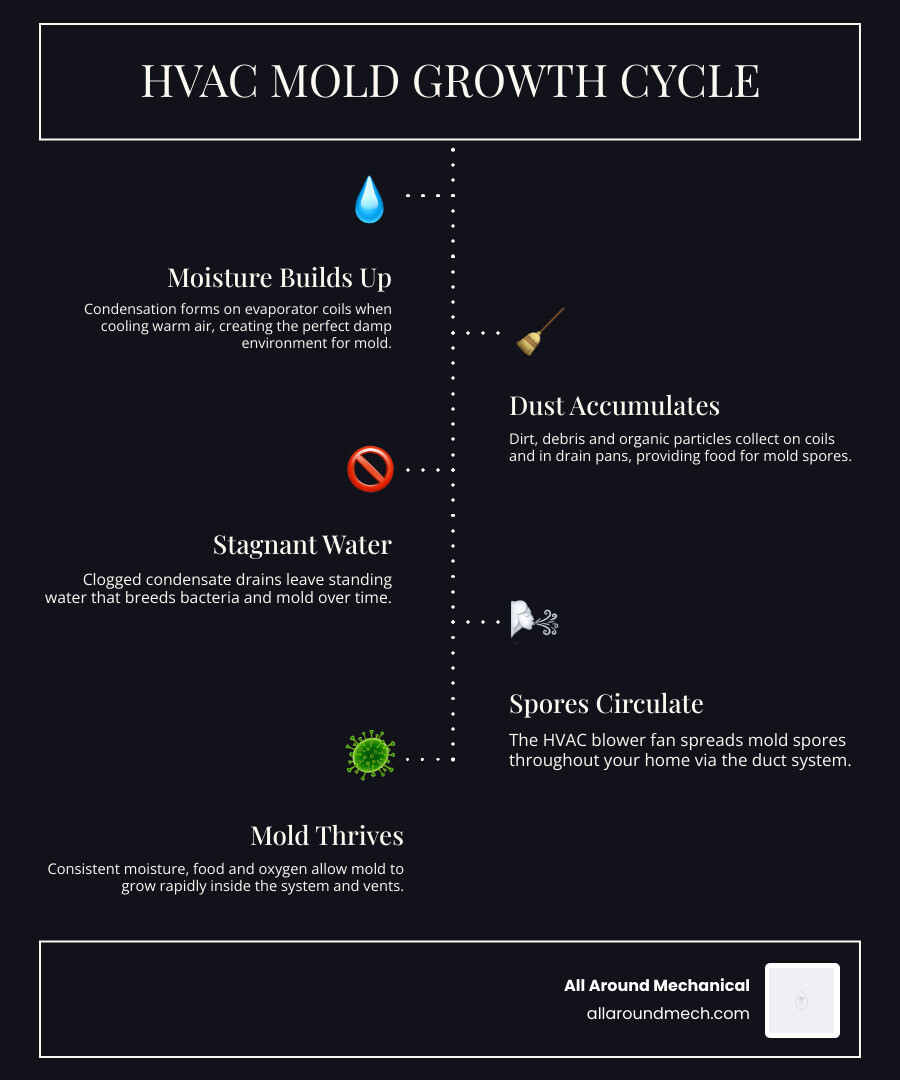
To understand how proper hvac maintenance prevents mold growth, we first have to look at the environment inside your air conditioner. Mold isn’t just a “sneaky little bugger”; it’s an organism with very specific needs. To thrive, it requires four things: moisture, oxygen, a comfortable temperature (usually between 32°F and 120°F), and a food source.
Your HVAC system naturally provides three of these. It moves oxygen, stays within those temperature ranges, and—if not maintained—collects dust and debris that serve as an all-you-can-eat buffet for mold spores. The missing ingredient is moisture. When your system is running correctly, it manages moisture. When it’s neglected, condensation builds up, stagnant air pockets form, and the “lungs of your home” begin to breathe out mold.
Using How Comprehensive IAQ Services Protect Your Family is the best way to ensure these variables stay in check. Without proper airflow and moisture management, your system transitions from a comfort provider to a mold incubator.
Why How Proper HVAC Maintenance Prevents Mold Growth Starts with the Evaporator Coil
The evaporator coil is the heart of the cooling process. As the refrigeration cycle takes place, this coil becomes very cold. When warm, humid air from your Ridgefield or Vancouver home passes over these aluminum fins, the moisture in the air condenses into liquid water—much like sweat on a cold glass of lemonade in July.
Under normal conditions, this water drips into a pan and exits your home. However, if the coil is covered in dirt or hair, that debris traps the moisture. This combination of “food” (dust) and “water” (condensation) on the dark, cool surface of the coil is the primary breeding ground for mold.

How Proper HVAC Maintenance Prevents Mold Growth in Southwest Washington
In our neck of the woods—from Camas to Longview—we deal with varying humidity levels that can put a strain on your system. One of the most common HVAC-related causes of mold is a clogged condensate drain line. These lines carry the water removed from your air to the outside. Over time, algae and sludge can build up, causing water to back up and stand in the drain pan.
Standing water is a massive red flag. When water sits, mold begins to germinate within 24 to 48 hours. Furthermore, dirty air filters restrict airflow. When air can’t move freely, the evaporator coil can actually freeze. When it eventually thaws, it releases a flood of moisture that the drain system may not be able to handle, leading to overflows and dampness in the surrounding cabinetry or flooring.
Understanding The Benefits of Preventative AC Maintenance helps you avoid these messy, moisture-rich disasters before they start.
Understanding How Proper HVAC Maintenance Prevents Mold Growth Through Humidity Control
The “60% Rule” is a critical industry standard. Mold typically flourishes in environments where the relative humidity stays above 60%. In Southwest Washington, especially during those damp spring and humid summer months, indoor humidity can easily creep up if your HVAC system isn’t cycling correctly.
The ideal indoor humidity for comfort and mold prevention is between 30% and 50%. We often recommend that homeowners use a hygrometer—a simple, inexpensive tool—to monitor these levels. If your AC unit is oversized, it might “short cycle,” meaning it cools the house quickly but shuts off before it has a chance to remove the humidity, leaving your home feeling cold and clammy.
In these cases, exploring the Benefits of Whole House Dehumidifiers for Home can be a game-changer for your indoor air quality and structural integrity.
Essential Maintenance Tasks for a Mold-Free Home
Prevention is always more effective (and much cheaper) than remediation. As we move into May 2026, staying consistent with these tasks will keep your air fresh:
- Change Air Filters Every 1–3 Months: Use filters with a MERV rating between 8 and 13. These are efficient enough to trap mold spores without overworking your system.
- Flush Your Drain Lines: Once a month, pouring a cup of white vinegar down the condensate drain line can help prevent the buildup of algae and slime that leads to clogs.
- Keep Vents Unblocked: Ensure furniture, rugs, and curtains aren’t blocking supply or return vents. Restricted airflow leads to stagnant air and localized moisture buildup.
- Inspect the Outdoor Unit: Keep at least two feet of clearance around your outdoor condenser. Clear away grass clippings, leaves, and debris to ensure the system can breathe and dehumidify effectively.
By following these steps, you secure the Key Benefits of Regular HVAC Service, which include lower energy bills and a significantly lower risk of mold infestation.
Professional Inspections and Long-Term Benefits
While monthly DIY tasks are great, they don’t replace a professional eye. We recommend bi-annual service: a spring tune-up for your cooling system and a fall check-up for your heating. During these visits, a technician can deep-clean the evaporator coils and check the “deep seal” traps that homeowners often can’t reach.
The long-term benefits go beyond just mold prevention. A well-maintained system lasts longer and operates more efficiently. Plus, when your system isn’t fighting through layers of dust and mold, it uses less energy. You can learn more about How a Tighter Building Envelope Saves You Money and Energy to see how maintenance and home sealing work together to protect your wallet.
Advanced Solutions for Superior Indoor Air Quality
For families with high sensitivity to allergens or those living in particularly damp areas like Woodland or Battle Ground, standard maintenance might need a boost. One of the most effective advanced solutions is the installation of UV-C germicidal lights.
These lights are installed inside the air handler, right next to the evaporator coil. They emit a specific wavelength of light that disrupts the DNA of mold spores and bacteria, rendering them unable to reproduce. This keeps the coils sterile 24/7. Additionally, antimicrobial coatings can be applied to internal components to inhibit growth on surfaces.
If you are moving into a new home or haven’t had your system serviced in years, How Cleaning Your Ducts Can Improve the Air Quality is a vital first step. Over the years, ducts can collect inches of dust—the perfect “soil” for mold to grow in if moisture enters the system.
The Role of Duct Sealing and Insulation
Leaky ductwork is a major contributor to HVAC mold. If your ducts have cracks or disconnected joints in an unconditioned attic or crawl space, they pull in hot, humid air. When that humid air hits the cool metal of the duct, it condenses into water.
This hidden moisture can lead to mold growth inside your walls or ceilings before you ever see a spot. Proper insulation around your ducts prevents this “sweating” effect. This is why the Importance of Regular Duct Cleaning often goes hand-in-hand with a professional inspection of your duct seals and insulation integrity.
Recognizing the Signs of HVAC Mold Infestation
How do you know if the “sneaky little bugger” has already moved in? Watch for these red flags:
- Musty Odors: If you notice an earthy, damp smell only when the AC or heat kicks on, that’s a sign of microbial volatile organic compounds (mVOCs) being released by active mold growth.
- Visible Speckled Patches: Look at your vent louvers. If you see black, green, or white speckles that look like “peppered dust,” it’s likely mold.
- Allergy Flare-ups: If family members experience sneezing, coughing, or itchy eyes that magically disappear when they leave the house, your HVAC system may be circulating spores.
If you find a moldy area smaller than 10 square feet (about 3ft x 3ft), the EPA suggests you may be able to handle it yourself with detergent and water. However, if it’s inside your ductwork or covers a large area, you need professional remediation to avoid spreading the spores further. Solutions like those found in Breathe Easy and Reduce Allergies with HVAC Solutions can help restore your home to a healthy state.
Frequently Asked Questions about HVAC Mold Prevention
How often should I change my filters to prevent mold?
In Southwest Washington, we recommend checking your filters every month. If you have pets or live in a high-pollen area like Brush Prairie, you should replace them every 30 to 60 days. At a minimum, never go longer than 90 days. A clogged filter is a moisture-trap and a food source for mold.
What is the best humidity level for a home in Vancouver, WA?
The ideal range is 30% to 50%. During our peak humid months, try to keep it strictly below 50%. In the winter, you might drop it toward 30-35% to prevent condensation on your windows, which can lead to mold on windowsills.
Can a dirty HVAC system cause health problems?
Yes. Mold spores are known triggers for asthma, allergies, and respiratory infections. Prolonged exposure can lead to headaches, fatigue, and persistent coughing. Keeping your system clean isn’t just about the equipment; it’s about protecting your family’s health.
Conclusion
At All Around Mechanical, we’ve seen how a little bit of neglect can lead to a big mold problem. Whether you are in Ridgefield, Battle Ground, or downtown Vancouver, the principles remain the same: control the moisture, and you control the mold.
Our team is dedicated to providing exceptional service at competitive prices. We don’t just “fix” things; we help you create a healthy, comfortable environment for your family. From professional coil cleaning to advanced humidity control and UV light installations, we are here to ensure your HVAC system stays a source of comfort, not a source of spores.
Don’t wait for that musty smell to take over your home. Schedule your professional HVAC maintenance today and breathe easy knowing your Southwest Washington home is protected by the pros.