

 (360) 896-2829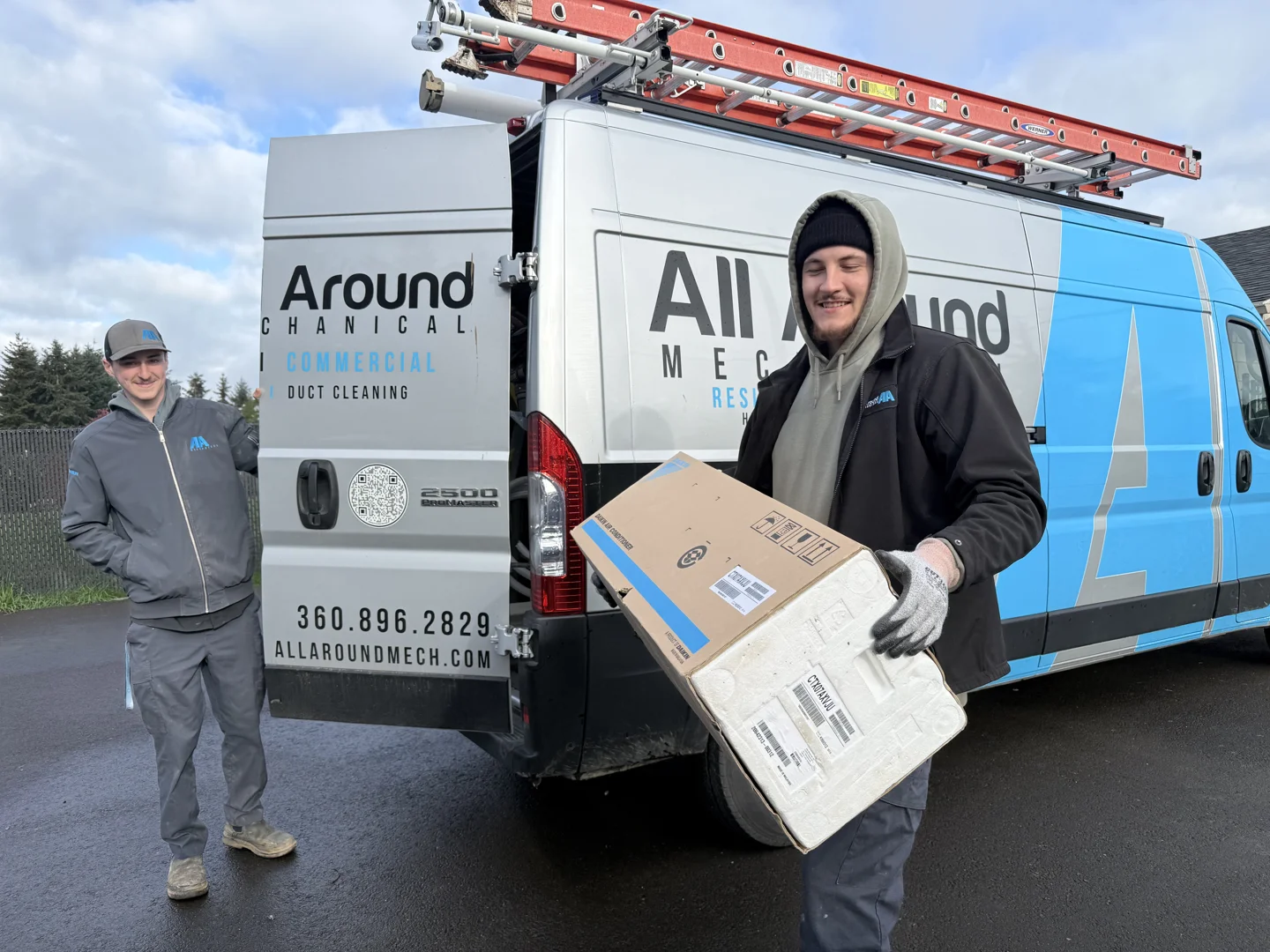
When Your Heat or AC Fails in Southwest Washington: What to Do Right Now
If you need emergency HVAC repair tips for Southwest Washington homeowners, here’s what to do immediately:
- Check the thermostat – Replace batteries and confirm settings are correct
- Inspect your circuit breaker – Reset any tripped breakers before calling for service
- Replace a clogged air filter – A dirty filter can cause sudden system shutdowns
- Clear debris from your outdoor unit – Blocked airflow causes rapid failure
- Shut the system off if you smell burning, see sparks, or notice a yellow pilot flame
- Call a licensed 24/7 HVAC technician for anything beyond these basic checks
Southwest Washington’s climate is no joke. Summers push toward 95°F and winters can drop to 25°F or lower – and your HVAC system picks the worst possible moments to fail. Over 60% of HVAC emergencies happen during peak seasons, right when you need your system most.
Whether your heat pump iced over on a cold January night in Ridgefield or your AC stopped cooling during a Vancouver heatwave, a fast and informed response makes a real difference – for your comfort, your safety, and your wallet. About 40% of HVAC emergencies actually start as small, ignored problems like a faulty thermostat or a clogged filter. Catching them early – or knowing exactly what to do when things go wrong – can save you from a much bigger headache.
This guide walks you through everything: how to spot a true emergency, what to check before you call, what the service visit looks like, and how to prevent the next breakdown before it happens.

Identifying a True HVAC Emergency in the Vancouver and Ridgefield Area
Not every HVAC hiccup requires a midnight service call, but in the Pacific Northwest, certain situations demand immediate action. Understanding what qualifies as a “true emergency” helps protect your family and your property.
Health and Safety First
The most critical emergencies involve health risks. If your household includes infants, seniors, or individuals with chronic health conditions, a loss of climate control during a 95-degree August afternoon or a 25-degree January night is a major emergency. Extreme temperatures can lead to heat exhaustion or hypothermia much faster than most people realize.
Dangerous Smells and Sights
If you notice an electrical burning smell—like melting plastic or ozone—shut your system off at the breaker immediately. This often indicates a failing motor or compromised wiring that could lead to a fire. Similarly, if you have a gas furnace and see a yellow or orange pilot light instead of a crisp blue flame, this is a sign of incomplete combustion and a potential carbon monoxide risk. Carbon monoxide is odorless and colorless, making it a “silent killer.” If your CO detector sounds, evacuate immediately and call 911.
Protecting Your Property
In Southwest Washington, winter freezes are a serious threat to your plumbing. If your heating system fails completely when temperatures are below freezing, your pipes are at risk of bursting. This can cause thousands of dollars in water damage. Furthermore, if you notice significant water leaking from your indoor unit, it could indicate a clogged condensate line or a cracked drain pan that could ruin your flooring and drywall.
To help you decide whether to pick up the phone, check out these 8 Warning Signs That Indicate Your HVAC System Needs Emergency Repair. Recognizing these Signs You Need Heating Repair Services early can be the difference between a simple fix and a total system replacement.
Essential Emergency HVAC Repair Tips for Southwest Washington Homeowners to Use Before Calling

Before you search for “emergency HVAC repair near me,” there are several DIY checks that might resolve the issue or, at the very least, provide your technician with vital information.
The “Big Three” Troubleshooting Steps
- The Thermostat: It sounds simple, but a dead battery or an accidental setting change (like being set to “on” instead of “auto”) causes a surprising number of service calls. Ensure it is set to the correct mode and the temperature is set lower (for AC) or higher (for heat) than the current room temperature.
- Circuit Breakers: Check your electrical panel. HVAC systems pull a lot of power, especially during extreme weather. A tripped breaker might be a one-time fluke or a sign that the system is overworking. If it trips again immediately after resetting, do not try a third time—call us.
- Air Filters: A severely clogged filter restricts airflow so much that the system may shut down to prevent the motor from overheating or the coils from freezing. If your filter looks like a wool sweater, replace it immediately.
Inspect the Exterior
Walk outside and look at your outdoor unit. In Southwest Washington, windstorms often blow leaves, pine needles, and debris against the unit, choking the airflow. Ensure there is at least two feet of clear space around the entire unit. If you see ice forming on the copper lines or the unit itself during the summer, shut it off. Frozen coils are often a sign of refrigerant leaks or airflow issues that need professional attention.
Gather Your Info
If these steps don’t work, gather your system’s make and model number (usually found on a nameplate on the side of the unit) and note exactly what happened. Did it make a loud bang? Is it blowing lukewarm air? Having these Emergency AC Repair Solutions and details ready helps our team diagnose the problem faster.
Common HVAC Failures in the Pacific Northwest and How to Manage Them
Our unique “damp cold” in places like Battle Ground and Camas creates specific challenges for HVAC systems. Here are the most frequent culprits we see:
Heat Pump Icing and Defrost Issues
Because heat pumps are incredibly popular in our region for their efficiency, we often see them struggle during freezing fog or snow events. While it’s normal for a heat pump to develop a light frost and then enter a “defrost cycle,” it shouldn’t look like a solid block of ice. If the defrost board fails, the unit can’t shed the ice, and the heating efficiency plummets. This is a common reason for Heat Pump Emergency Repairs.
Electrical Component Failures
Capacitors and blower motors are the workhorses of your system. Capacitors act like a “battery” to give the motor the kick it needs to start. During a heatwave, these components are under immense stress and frequently fail. If you hear a humming sound but the fan isn’t spinning, a dead capacitor is likely the cause.
Refrigerant Leaks
If your system is running constantly but the temperature in the house isn’t moving, you might have a refrigerant leak. This is a serious issue because refrigerant requires professional handling and can cause skin or respiratory irritation. Watch for these 7 Warning Signs Your HVAC System Is Failing and these Signs Your HVAC System Needs a Repair to stay ahead of a total breakdown.
When to Repair vs. Replace
If your system is over 12 to 15 years old and faces a major component failure (like a compressor or heat exchanger), we often recommend considering a replacement. Modern high-efficiency systems can operate 15-20% more efficiently than older models, which can significantly lower your utility bills in the long run.
What to Expect During Your Emergency Service Visit in Southwest Washington
When you call for an emergency visit, you aren’t just getting a “quick fix”—you’re getting a professional diagnostic and a safety check.
Rapid Dispatch and Arrival
In locations like Brush Prairie and La Center, we prioritize emergency calls to get a technician to your door as quickly as possible, often within hours. When the technician arrives, they will perform a series of tests to find the root cause of the failure. Most emergency repairs take between one and two hours to complete once the problem is identified.
Transparent Communication
You should expect an upfront explanation of what broke and why. Our technicians carry common “truck stock” parts, such as capacitors, contactors, and universal motors, to resolve most issues on the first visit. If a specialized part is required from a manufacturer, we will provide temporary solutions to keep you safe and comfortable in the meantime.
Post-Repair Verification
A quality emergency service doesn’t end when the part is swapped. The technician should verify airflow, check refrigerant pressures, and ensure the thermostat is communicating correctly. You will receive a digital service report detailing the work performed and any warranties on the parts or labor. Familiarizing yourself with the Early Warning Signs of an AC Repair Problem can help you discuss the repair more confidently with your technician. For those in specific areas, knowing the local expertise for Emergency AC Repair Brush Prairie WA can give you peace of mind.
Long-Term Prevention and Local Resources for Home Comfort
The best way to handle an HVAC emergency is to prevent it from ever happening. Homeowners who schedule regular maintenance are 50% less likely to experience a sudden breakdown.
The Power of Prevention
A well-maintained HVAC system can last 15 to 20 years, whereas a neglected one might fail in as little as 8 to 10 years. Annual tune-ups in the spring (for AC) and fall (for heating) allow us to catch those minor component malfunctions before they turn into midnight emergencies. This is especially true for specialized systems; for instance, there are specific Signs Ductless AC Needs Immediate Attention that a professional can spot during a routine check.
Financial Assistance and Resources
If you are facing an energy crisis or need help with heating costs, there are federal and local resources available for Southwest Washington residents:
- LIHEAP (Low Income Home Energy Assistance Program): Provides assistance with energy bills and minor energy-related home repairs. You can visit Energyhelp.us or call 1-866-674-6327.
- Clark County Energy Resources: Local community action agencies often have programs to help low-income households with weatherization and emergency heating equipment repair.
- Utility Rebates: Check with Clark Public Utilities or Cowlitz PUD for rebates on high-efficiency heat pump upgrades, which can make a new, more reliable system much more affordable.
Frequently Asked Questions about Emergency HVAC Repair
What are the most critical emergency HVAC repair tips for Southwest Washington homeowners during a heatwave?
If your AC fails during a heatwave, safety is the priority. Stay hydrated and move to the lowest level of your home, as heat rises. Block out sunlight by closing blinds and curtains on the south and west sides of the house. Use portable fans to move air, but fans cool people, not rooms—don’t leave them running in empty spaces. Avoid using heat-producing appliances like the oven or dryer until the repair is complete.
How do I know if I need emergency HVAC repair tips for Southwest Washington homeowners or if it can wait until Monday?
If the indoor temperature is still within a safe range (usually between 60°F and 80°F) and there are no signs of fire, gas leaks, or water damage, it can likely wait until normal business hours. However, if you have vulnerable family members, or if the system is making loud banging noises, smelling like smoke, or leaking water into your home, you should call for emergency service immediately.
What local resources are available for emergency heating assistance in Clark County?
Residents can contact the National Energy Assistance Referral (NEAR) at 1-866-674-6327 for help finding local LIHEAP providers. Additionally, Clark Public Utilities offers various assistance programs and information on energy-saving upgrades that can prevent future emergencies.
Conclusion
At All Around Mechanical, we understand that an HVAC failure is more than just an inconvenience—it’s a disruption to your life and a threat to your home’s sanctuary. Whether you are in Vancouver, Ridgefield, Camas, or any of our surrounding communities, our “customer-first” philosophy means we prioritize your safety and comfort above all else.
We serve a wide range of locations, including Brush Prairie, Battle Ground, Washougal, Yacolt, Ariel, La Center, Amboy, Kalama, and Longview, WA. From expert heat pump services to emergency furnace repairs, we are dedicated to providing exceptional service at competitive prices. Don’t wait for a small problem to become a total system failure. If you’re experiencing issues, Request expert emergency HVAC assistance in Southwest Washington today and let us get your home back to the comfortable haven it should be.