

 (360) 896-2829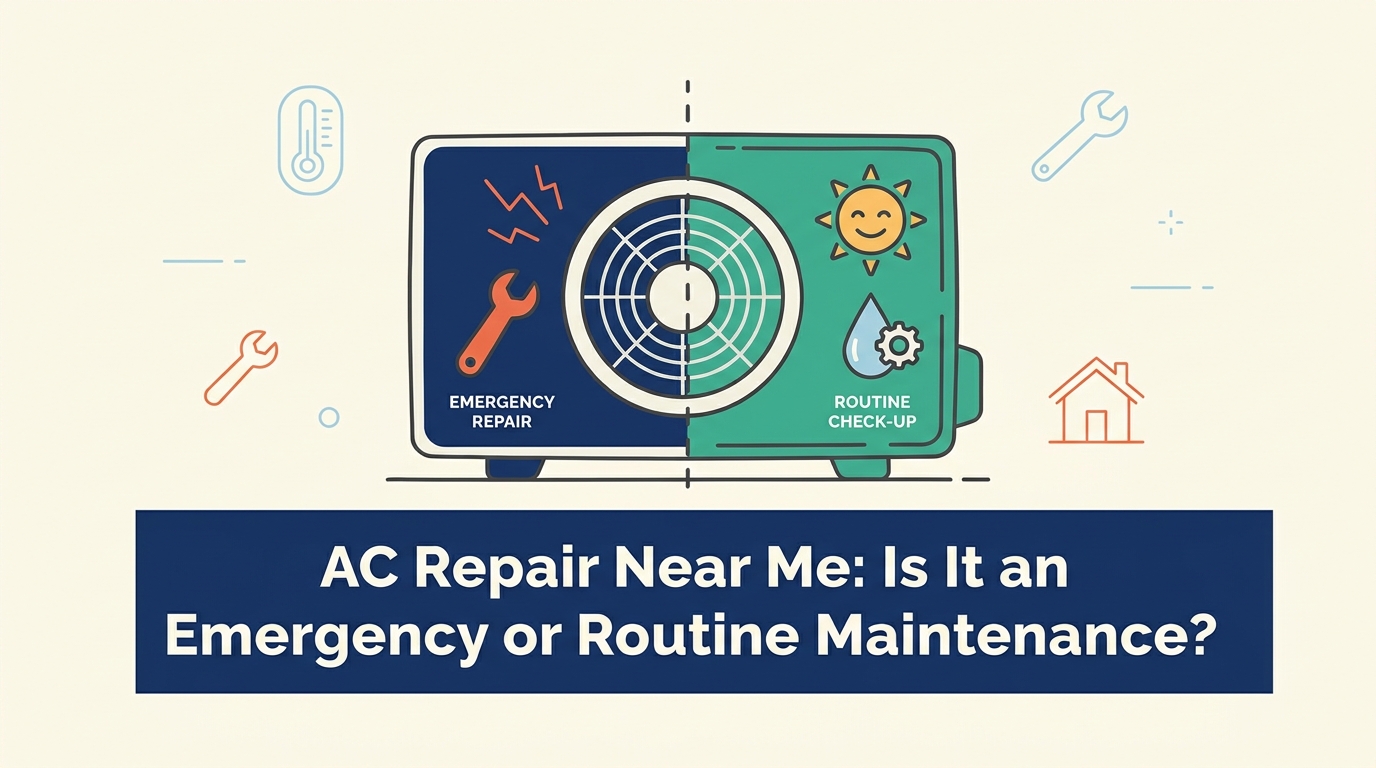
Sudden AC Failures: Deciding Your Next Steps
Your air conditioner is running constantly, but the house is getting warmer by the minute. When you are sweating through a sudden breakdown, reliable home maintenance tips and troubleshooting can mean the difference between a quick fix and a highly stressful afternoon. Acknowledge the immediate anxiety of an unexpected AC breakdown—it is incredibly frustrating when the equipment you rely on for comfort suddenly stops cooperating. However, panic often leads to rushed decisions.
At our business, our team typically sees that determining whether a sudden home system issue requires immediate emergency service or routine maintenance scheduling is a critical decision point for any homeowner. The core dilemma is deciding whether to pay premium emergency dispatch fees for an after-hours visit or if the issue can safely wait for standard business hours. This is a common search pattern: emergency repair vs routine maintenance is a topic that confuses many property owners, especially when the temperature inside the house is steadily climbing.
The short answer is that not every strange noise or warm breeze constitutes a true crisis. By stepping back and evaluating the situation objectively, you can protect your wallet and your peace of mind. Setting expectations early is key: a neutral, objective symptom checklist will help you make a confident choice. Knowing exactly what to look for allows you to communicate effectively with our dispatchers and avoid unnecessary premium charges for a minor glitch that could easily be addressed on a Tuesday morning.
The Financial and Comfort Implications of Your Choice
Most homeowners do not realize that dispatching a technician at 2:00 AM on a Sunday involves different logistical costs than a scheduled Wednesday afternoon appointment. Emergency services are vital for safety, but utilizing them for non-critical issues strains local service schedules and increases your out-of-pocket expenses. By learning to accurately diagnose the severity of your system’s symptoms, you take control of the situation. You transition from feeling helpless to making an informed, strategic decision about your home’s infrastructure.
Safe Homeowner Troubleshooting Before Calling a Pro
Before you pick up the phone to request any professional dispatch from our team, there are several safe, basic checks you can perform yourself. These steps do not require specialized tools, nor do they cross the line into licensed professional territory. Often, what appears to be a catastrophic failure is simply a minor oversight or a triggered safety mechanism designed to protect the equipment.
- Inspect the air filters: A dirty, clogged air filter is the single most common cause of restricted airflow, system freezing, and eventual failure. When air cannot flow freely over the evaporator coil, the condensation freezes into a block of ice, halting the cooling process entirely. Check your filter and replace it if it is visibly coated in dust and debris.
- Verify power at the electrical panel: Always verify power at the electrical breaker before assuming the unit is dead. A temporary power surge or an overloaded circuit can cause the dedicated AC breaker to trip. Locate your main electrical panel and look for a switch that has moved to the middle, neutral position. Firmly push it to the “off” position, then back to “on.” If it trips again immediately, stop—this indicates a serious electrical fault that requires a professional.
- Check the thermostat settings: It sounds overly simple, but thermostats are frequently bumped, reprogrammed by children, or accidentally switched from “Cool” to “Fan Only.” Ensure the system is actively set to cool and that the target temperature is set at least five degrees below the current room temperature to force the system to cycle on.
- Examine the outdoor unit: Walk outside and visually inspect the condenser cabinet. Ensure it is not smothered by overgrown bushes, suffocated by a buildup of cottonwood seeds, or blocked by outdoor furniture. The system needs clear airflow to exhaust the heat it removes from your home.
For a deeper dive into safe DIY checks and ongoing care, review our AC repair tips for homeowners. Emphasize to yourself that if these basic checks do not resolve the issue, professional diagnostics are absolutely required. Never attempt to open sealed electrical compartments or handle refrigerant lines yourself.
Symptom Severity Matrix: When to Wait vs. When to Act
Over our years of helping homeowners across the local area, we’ve found that understanding the search pattern of emergency repair vs routine maintenance requires clear, objective criteria. The goal is to define what constitutes a minor issue that can wait for standard business hours versus critical warning signs that demand immediate attention. Answering this research gap prevents panic and helps you avoid unnecessary premium expenses.
A minor issue might involve slightly reduced airflow, a new but faint rattling noise, or a system that takes a bit longer to cool the house than it did last year. These are signs of wear and tear or minor component degradation. They need to be addressed to prevent larger failures, but they do not pose an immediate threat to your home or safety. Conversely, critical signs like electrical burning smells, sparking, or a complete system failure during extreme heat are immediate red flags.
| System Symptom | Severity Level | Recommended Action | Underlying Risk if Ignored |
|---|---|---|---|
| Acrid, electrical burning smell | Critical Emergency | Shut off power at breaker; call 24/7 service | High risk of electrical fire or severe motor burnout |
| Complete failure during a heat wave | High Priority | Call for emergency dispatch | Dangerous indoor temperatures, especially for vulnerable individuals |
| Water rapidly pooling around indoor unit | High Priority | Turn off system; call for urgent repair | Significant water damage to drywall, flooring, and framing |
| System runs constantly but cools slightly | Moderate Issue | Schedule routine maintenance | Elevated utility bills and premature compressor wear |
| Minor squeaking or rattling on startup | Low Priority | Schedule standard diagnostic visit | Loose fan belt or minor hardware vibration |
By consulting this matrix, you can accurately gauge your next steps. Understanding these symptoms removes the guesswork from home management. Furthermore, it reinforces the reality that routine maintenance is your best defense against these stressful scenarios. Regular, proactive tune-ups can extend your system’s lifespan to 15 years or more, preventing the vast majority of these sudden surprises from ever occurring.

How Unpredictable Weather Escalates AC Vulnerabilities
The severity of an air conditioning failure is rarely just about the equipment; it is heavily dictated by the environment outside your walls. Regional climate data plays a massive role in explaining how external temperatures impact the urgency of a repair. What might be considered a minor inconvenience in the spring can rapidly evolve into a critical safety issue at the height of summer.
As local experts serving the Ridgefield and Vancouver areas, we know firsthand that during unpredictable Pacific Northwest summer heat waves, indoor temperatures can reach dangerous levels within hours of an AC failure. Homes in this region are often built to retain heat for the colder, wetter months. When the sun beats down on the roof during a 95-degree spike, the thermal mass of the house absorbs that heat. Without an active cooling system to remove it, the indoor environment acts like an oven, trapping the hot air inside.
An issue that might be considered routine in mild 70-degree weather quickly becomes a safety emergency during extreme temperature spikes. Vulnerable populations, including the elderly, infants, and household pets, cannot safely regulate their body temperatures when indoor heat indexes climb past 85 degrees. Homeowners must factor the current and forecasted weather into their repair timeline decision. If the forecast predicts a multi-day heat dome and your system is blowing warm air, waiting for normal business hours is no longer a safe or viable option. In these climate-specific scenarios, rapid local AC repair response becomes absolutely essential for home safety.
Evaluating Local AC Repair Companies for Urgent Needs
When you have determined that your situation truly requires immediate attention, your next challenge is finding a reliable professional. Searching for a technician “near me” will yield dozens of results, but not all contractors operate with the same level of transparency and availability. Guiding your selection process ensures you receive prompt, honest service.
- Look for clear diagnostic criteria: Outline the importance of finding a local contractor who offers clear communication over the phone. A reputable company will ask you diagnostic questions to help determine if the call is a true emergency, rather than automatically pushing emergency fees for every single inquiry. They should act as an advisor, not just an order-taker.
- Verify true 24/7 availability: Discuss the value of genuine around-the-clock service. Many companies advertise emergency service, but merely route after-hours calls to an answering service that leaves a message for the next business day. When an actual emergency is verified, you need a company with technicians actively on call and ready to dispatch, ensuring your 24/7 availability and reliable local expertise are put to work immediately.
- Prioritize local geographic proximity: Explain how local expertise ensures faster response times during regional heat waves. A contractor based in your specific community spends less time navigating highway traffic and more time diagnosing your system. Local technicians also understand the specific architectural styles and common HVAC setups native to your neighborhoods.
- Demand upfront transparency on dispatch fees: Before agreeing to an after-hours visit, ask exactly what the emergency dispatch fee covers. A trustworthy contractor will clearly separate the cost of showing up at midnight from the cost of the actual parts and labor required for the repair.
Frequently Asked Questions About AC Diagnostics and Repairs
What is considered an HVAC emergency?
A true HVAC emergency is any situation where a system failure threatens immediate property damage or severe health risks. This includes a complete system failure during extreme heat, which can quickly make a home uninhabitable for vulnerable family members. Additionally, electrical issues such as burning smells, sparking from the cabinet, or rapid water leaks that threaten to collapse drywall are absolute emergencies requiring immediate dispatch.
Can I wait until tomorrow for AC repair?
Yes, you can safely wait if the current weather is mild and the interior of the home remains at a comfortable, safe temperature. You can also delay service if the issue is a minor noise, a slight efficiency drop, or a slow drain line drip rather than a total system breakdown. Waiting for standard business hours in these non-critical scenarios will save you from paying premium after-hours dispatch fees.
How do I know if my AC compressor is bad?
A failing AC compressor often presents with severe, unmistakable symptoms that disrupt the entire cooling process. If your system trips the circuit breaker repeatedly every time it tries to cycle on, the compressor is likely shorting out or pulling too much amperage. Other strong indicators include loud grinding, clanking, or squealing noises from the outdoor unit, as well as warm air blowing from your vents despite the thermostat being correctly set to cool.
Why is my AC running but not cooling?
Our technicians frequently find this is caused by a severely clogged air filter restricting the necessary airflow over the indoor coil, which prevents the system from removing heat. It can also point to a potential refrigerant leak; without enough refrigerant, the system cannot absorb heat from your indoor air, requiring professional leak detection and repair. Finally, restricted airflow or low refrigerant can lead to frozen evaporator coils, which physically block the cooling process entirely.
How often should routine AC maintenance be performed?
Routine AC maintenance should be performed at least once a year, ideally in the spring before the peak cooling season begins. Regular maintenance allows a technician to clean vital components, check refrigerant levels, and tighten electrical connections. This proactive approach prevents unexpected breakdowns, maintains energy efficiency, and extends the overall operational life of your system.
Make an Informed Decision on Your AC Repair
Knowing the difference between an emergency and a routine issue saves you both unnecessary stress and unexpected money. By utilizing the triage guidance provided, you can step back from the immediate anxiety of a warm house and evaluate your system objectively. Whether it is a simple filter change or a complex electrical fault, understanding the symptoms puts you in control of the situation.
At our business, we encourage homeowners to use the provided criteria to assess their current situation confidently. Check your thermostat, verify your breakers, and observe the specific symptoms your equipment is displaying. If your troubleshooting points to a minor glitch, schedule a standard visit. However, if your symptoms align with a critical failure during extreme weather, do not wait. Reach out to our team for a professional inspection or emergency dispatch today to restore your home’s safety and comfort.