

 (360) 896-2829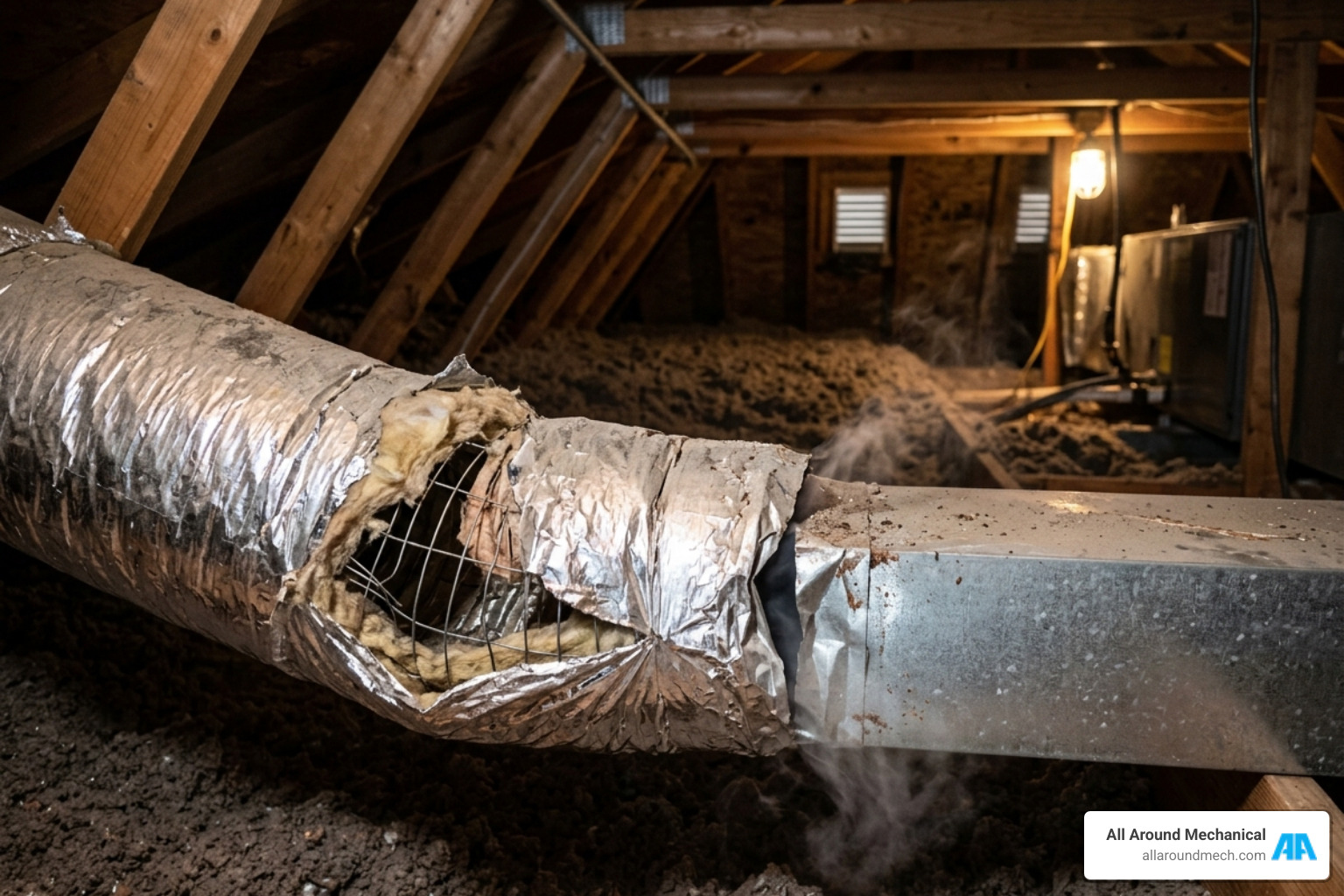
Why Duct Leaks Are Silently Draining Your Energy and Your Indoor Air Quality
How duct leaks waste energy and reduce air quality is one of the most overlooked problems in Southwest Washington homes — and one of the most expensive. Most homeowners never think about their ductwork until something goes wrong. But hidden gaps, cracks, and loose connections in your duct system could be silently dumping 20 to 30 percent of your heated or cooled air into your attic or crawlspace before it ever reaches a single room.
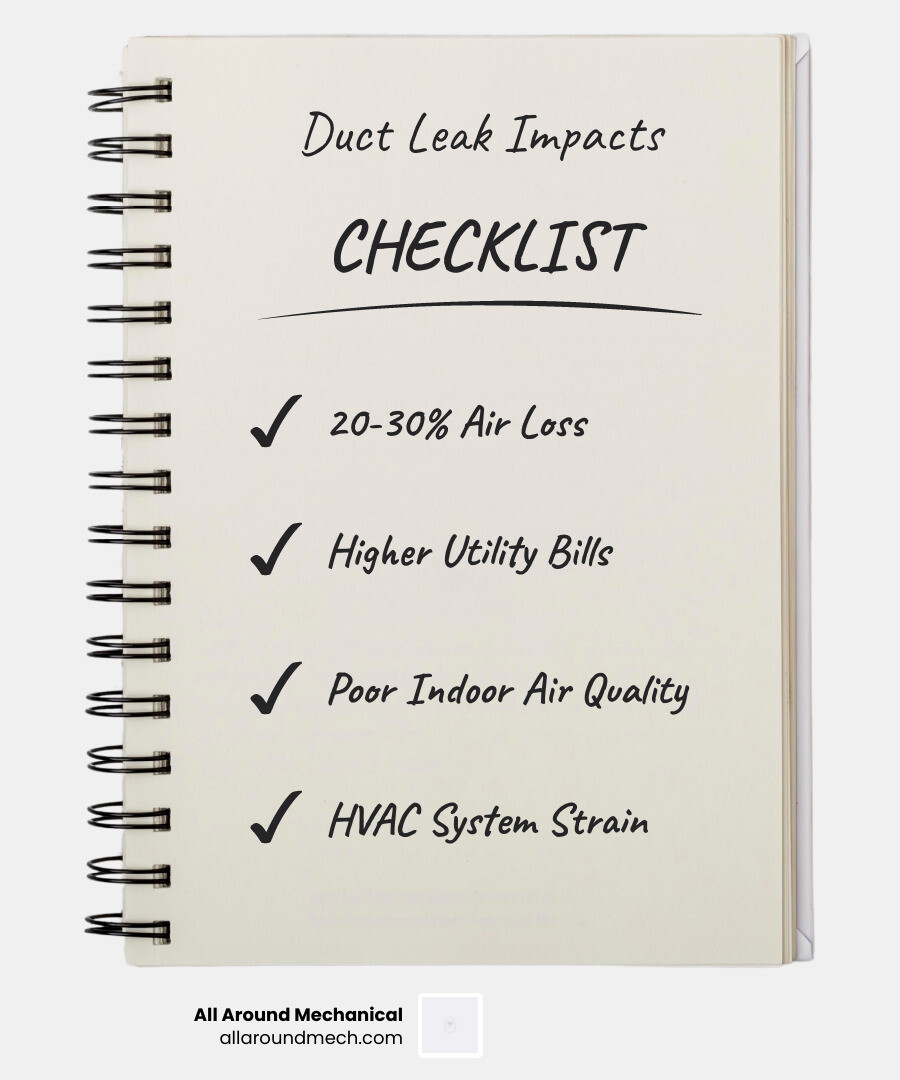
Here is a quick look at the core impacts:
- Energy waste: The U.S. Department of Energy estimates the average home loses 20–30% of conditioned air through leaky ducts, forcing your HVAC system to run longer and work harder
- Higher utility bills: That wasted air means wasted money — leaky ductwork can add hundreds of dollars a year to your heating and cooling costs
- Poor indoor air quality: Gaps in return ducts pull in dust, mold spores, allergens, and even combustion gases from unconditioned spaces like attics, crawlspaces, and garages
- Uneven comfort: Rooms feel too hot in summer and too cold in winter because conditioned air never arrives at full pressure
- HVAC system strain: A system fighting duct losses runs longer cycles, wears out faster, and breaks down sooner
The problem is not just discomfort. It is a compounding cycle — the more air that escapes, the harder your system pushes, and the more contaminants get pulled in from places you definitely do not want circulating through your home.
How Duct Leaks Waste Energy and Reduce Air Quality in Your Home
In the typical house, about 20% to 30% of the air that moves through the duct system is lost due to leaks, holes, and poorly connected ducts. This is not just a statistic; it is a reality for many families in Ridgefield and Vancouver, WA. When we talk about how duct leaks waste energy and reduce air quality, we are describing a system that is essentially trying to heat the great outdoors while you pay the bill.
According to ENERGY STAR, these leaks cause your heating and cooling system to work significantly harder to maintain the temperature set on your thermostat. If you are noticing that your HVAC system is constantly running or that your utility bills have spiked without a change in weather, it is often a sign of failing infrastructure. Understanding the 7 signs it is time to replace your air ducts can help you identify if your system has reached its breaking point.
In unconditioned spaces like attics and crawlspaces, the temperature difference between the air inside the duct and the air outside it is extreme. In April 2026, as we see more volatile spring temperatures in Southwest Washington, a leak in an attic can cause your furnace or AC to lose its “charge” of conditioned air instantly. This thermal loss is the primary driver behind those frustrating utility bill spikes.
Why Leaky Ducts Force Your HVAC System to Work 50% Harder
When your ducts leak, it creates a pressure imbalance. Your HVAC system is designed to move a specific volume of air. If 20% of that air escapes, the system has to run much longer to reach the desired temperature. In fact, research shows that ducts leaking just 20% of conditioned air can cause the system to work 50% harder.
This extra work translates directly into mechanical strain. The blower motor has to run for extended periods, and the compressor experiences significantly more fatigue. Over time, this shortens the equipment’s lifespan, leading to premature replacements. If you are in the Brush Prairie area, ensuring your duct work in Brush Prairie WA is airtight is the best way to protect your HVAC investment from this unnecessary wear and tear.
The Financial Impact of Conditioned Air Escaping into Attics
The U.S. Department of Energy notes that leaky ductwork can increase energy use by 25% to 30% or more. For a homeowner in Vancouver or Camas, this could mean adding hundreds of dollars a year to your heating and cooling bills. It is the equivalent of leaving a window open year-round.
The importance of regular duct cleaning and inspection cannot be overstated here. While cleaning removes the debris, a professional inspection identifies where your money is literally blowing away into the insulation of your attic. By sealing these leaks, many homeowners see their investment pay for itself in just a few years through reduced monthly costs.
The Hidden Health Risks of Poorly Sealed Ventilation
While the financial loss is significant, the impact on your health is often more concerning. How duct leaks waste energy and reduce air quality becomes a medical issue when you consider what is being pulled into your breathing air. Leaky ducts act like a vacuum, sucking in dust, allergens, and mold spores from the dirtiest parts of your home.
When air is pushed out of supply leaks, it creates negative pressure inside the house. This can lead to a dangerous phenomenon called backdrafting. This happens when combustion gases from gas water heaters or furnaces are pulled back into the living space instead of being exhausted through the flue. This presents a serious carbon monoxide safety risk. Furthermore, the circulation of Volatile Organic Compounds (VOCs) and other irritants can lead to chronic respiratory issues. Learning how cleaning your ducts can improve the air quality is a great first step toward a healthier home environment.
How duct leaks waste energy and reduce air quality by pulling in attic contaminants
Attics are not clean places. They are filled with fiberglass insulation particles, dust, and, unfortunately, often rodent droppings or nesting materials. When your ducts have holes, these contaminants are drawn directly into the air stream and blown into your bedrooms and living rooms.
High humidity in Southwest Washington can also lead to moisture entering the ducts through these leaks, promoting mold growth. If you are searching for duct cleaning in Vancouver WA, it is often because you have noticed an increase in dust or a musty smell — both of which are classic symptoms of leaky ducts pulling in attic or crawlspace air laden with fiberglass fibers and pesticide fumes.
Why return-side leaks are a major threat to your family’s health
The “return” side of your HVAC system is responsible for pulling air back to the furnace or air handler to be filtered and conditioned. If there is a leak on this side, the system pulls air from wherever is easiest — often the crawlspace or the garage.
Garage air can contain hazardous vapors from stored chemicals, paints, or vehicle exhaust. Because this air enters the system after the filter in many configurations, it bypasses your filtration system entirely. This introduces potent asthma triggers and pollutants directly into your home. Understanding the top 10 benefits of air duct cleaning and sealing can help you visualize how a sealed system acts as a protective barrier for your family.
Common Signs of Air Leaks in Southwest Washington Homes
Detecting a leak isn’t always as obvious as a loud hissing sound. Often, the signs are subtle but persistent. One of the most common indicators is uneven temperatures throughout the house. If your kitchen is comfortable but your upstairs bedroom feels like a sauna, you likely have a supply-side leak.
Other common signs include:
- Excessive Dust: If you find yourself dusting every few days despite keeping windows closed, leaky ducts are likely pulling in fine particles from the attic.
- Noisy Ductwork: Rattling or whistling sounds can indicate air escaping through small cracks or disconnected joints.
- Musty Odors: A “basement” or “attic” smell when the air kicks on is a dead giveaway.
- High Bills: As mentioned, unexplained increases in your utility costs are a major red flag.
If you notice these issues, it may be one of the 7 signs it is time to replace your air ducts or at least have them professionally sealed.
Simple DIY checks to see how duct leaks waste energy and reduce air quality
While we always recommend a professional evaluation, you can perform some basic checks yourself. Start with a visual inspection of accessible ductwork in your basement or attic. Look for sections that have separated or where the old “silver” duct tape is peeling and brittle.
Another trick is the “smoke pencil” test. Hold a small incense stick or a smoke pen near duct joints while the system is running. If the smoke is blown away or sucked into the joint, you’ve found a leak. You can also check for the importance of regular duct cleaning by looking for dark “ghosting” or dust patterns on the ceiling around your registers, which indicates air is leaking behind the drywall.
Identifying disconnected joints and fallen flex ducts
In Southwest Washington, many homes use flexible ductwork (flex ducts). These are prone to sagging over time if not supported correctly. We often see “fallen” ducts where the inner liner has detached from the plastic collar, dumping 100% of that room’s air into the crawlspace.
Rodent damage is another common culprit. Mice and rats find the insulation around ducts to be perfect nesting material and can chew large holes in the lines. Mastic failure — where the sealing paste becomes brittle and cracks due to age — is also common in older homes. If you need help identifying these issues, our experts in duct work in Brush Prairie WA can perform a comprehensive assessment.
Professional Solutions for Sealing and Insulating Your System
When it comes to fixing the problem, there is a big difference between a temporary patch and a permanent solution. Professionals use materials that are specifically designed for the high-pressure environment inside an HVAC system.
| Method | Effectiveness | Durability | Best Use Case |
|---|---|---|---|
| Mastic Sealant | High | Excellent | Large gaps and permanent joints |
| Foil Tape (UL-181) | Medium | Good | Small seams and flat surfaces |
| Aerosol Sealing | Very High | Excellent | Hidden leaks inside walls and ceilings |
Beyond sealing, adding duct insulation is a crucial step. This prevents “thermal gain” (air getting hot in the summer) or “thermal loss” (air getting cold in the winter) as it travels through unconditioned spaces. Combined with professional testing like a “duct blaster” or blower door test, these solutions ensure your home is as efficient as possible. This is a core part of how cleaning your ducts can improve the air quality and overall system performance.
Why professional sealing outperforms DIY “quick fixes”
We often see homeowners try to fix leaks with standard “duck” tape (the cloth-backed kind). This is a mistake. Standard duct tape is not actually rated for ducts; the adhesive dries out and fails within months. Professionals use UL-181 rated foil tapes and fiber-reinforced mastic that can last for decades.
Furthermore, much of your ductwork is hidden behind walls or under floors. Professional aerosol technology can seal these inaccessible leaks from the inside out. This specialized equipment ensures airflow optimization and system balancing, which is something a DIY approach simply cannot achieve. Our team providing duct cleaning in Vancouver WA and sealing services has the tools to reach every corner of your system.
How duct leaks waste energy and reduce air quality even in new construction
You might think a brand-new home in Ridgefield or Battle Ground is immune to these issues, but that isn’t always the case. Installation errors during the construction phase can leave joints unsealed. Additionally, construction debris like drywall dust and sawdust can settle in the ducts before the registers are even installed.
Ensuring your new home meets modern building codes for duct leakage is vital for localized comfort. Even in a new build, the top 10 benefits of air duct cleaning and a post-construction sealing check can prevent years of energy waste.
Frequently Asked Questions about Duct Integrity
How much energy is lost through leaky ducts?
On average, 20% to 30% of the energy used to heat or cool your home is lost through leaks. In some poorly maintained systems, this number can climb as high as 40%. This forces your system to run longer cycles, increasing your monthly utility costs significantly.
Can I use standard silver duct tape to fix leaks?
No. Despite the name, standard cloth duct tape is one of the worst materials for sealing HVAC ducts. It cannot handle the temperature fluctuations and will eventually peel off. You should always use mastic sealant or UL-181 rated foil-backed tape for a permanent fix.
Where should ducts be located for maximum efficiency?
Ideally, all ductwork should be located within the “conditioned space” of the home (inside the thermal envelope). However, in many Southwest Washington homes, they are located in attics or crawlspaces. In these cases, high-quality sealing and thick insulation are mandatory to prevent massive energy losses.
Conclusion
At All Around Mechanical, we know that your home’s comfort depends on more than just a high-end furnace or air conditioner. The “lungs” of your home — your ductwork — must be healthy, clean, and airtight to do their job. We are proud to serve our neighbors in Ridgefield, Vancouver, Brush Prairie, and throughout Southwest Washington with expert HVAC solutions that prioritize your comfort and your wallet.
If you are tired of throwing money into your attic, we are here to help. From sealing hidden leaks to providing top-tier duct work in Brush Prairie WA, our team is dedicated to making your home more efficient, safer, and more comfortable. Contact us today to schedule an inspection and start saving.